Wind & Storm Damage Roof Insurance Claims in Bend, OR
Documenting Cascade wind and high-desert hail damage on Bend commercial roofs for insurance claims, with a complete repair scope for your adjuster.
Wind and Storm Damage Roof Insurance Claims in Bend, OR
Wind is the peril that catches most Bend building owners off guard on a claim. There's no hurricane season here and no dramatic radar-tracked storm system - just pressure differences across the Cascades that push sustained gusts through the valley, and those gusts do real damage to a commercial roof even without a headline weather event behind them. Documenting that kind of damage for a claim means being specific about what wind actually did, since it's rarely as visually obvious as storm damage in other parts of the country.
How Cascade Wind Events Damage a Roof
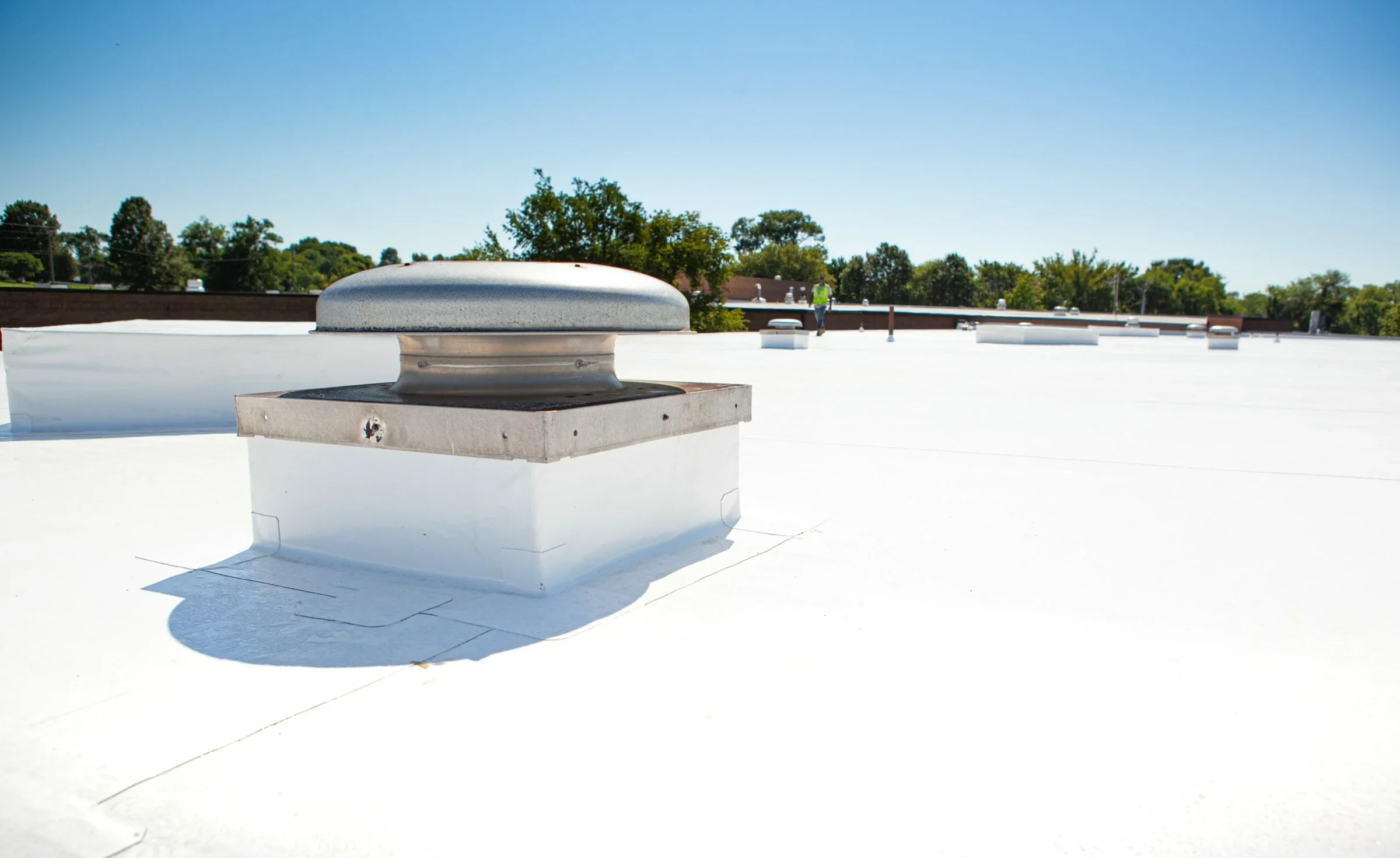
Sustained gusts funneling off the mountains concentrate uplift pressure at parapet corners, edge metal, and rooftop curbs. We see lifted seams on mechanically fastened membrane, pulled flashing at parapet returns, and rooftop units shifted or torn loose from curbs that weren't secured for the load. A single steady afternoon of wind can do as much cumulative damage to marginal flashing as a shorter, sharper gust event, which is part of why we document the whole roof field after a wind event rather than only the spot where a leak first showed up inside.
Summer Thunderstorm Wind and Hail
High-desert thunderstorms build fast in summer and can bring a combination of strong outflow wind and hail in the same event. Hail on a low-slope membrane often shows up as bruising and small punctures rather than obvious dents, and it's easy for that kind of damage to get missed in a quick visual check. We inspect the full membrane surface after any reported hail event in the area, including sections beyond whatever an owner can visibly point to, because bruised membrane that isn't leaking yet can still represent real, documentable damage to a carrier.
Photographing Wind and Storm Damage
We document lifted or torn membrane, displaced edge metal and coping, and any rooftop equipment that's been shifted or damaged, all photographed with location context and measured where the extent of the damage is relevant to scope. Where wind direction or debris patterns support the timeline of a specific storm event, we note that too, since carriers often want to confirm damage lines up with a dated weather event rather than gradual wear. On mixed-tenant buildings we also note whether rooftop equipment serving a specific unit was affected, since that detail can matter to how a claim gets routed between the building owner and a tenant's own coverage.
Distinguishing Storm Damage From Prior Wear
Not every lifted seam or displaced flashing piece is new. Older membranes that have already been through several seasons of Cascade wind can have marginal flashing that was already loose before the most recent event. We describe both conditions honestly in our documentation - what the storm caused and what condition the roof was already in - because that distinction is usually exactly what an adjuster is trying to sort out, and a report that blurs the two tends to slow a claim down rather than speed it up.
Buildings Most Exposed to Wind in Bend
Taller parapet walls and mechanical screen walls on office and light-industrial buildings can shift wind patterns enough to concentrate uplift on one section of roof rather than spreading it evenly, something we see often on buildings out toward the east side industrial parks. Downtown and Old Mill District buildings with a mix of rooftop equipment ages tend to show the most variation - older units secured to outdated code standards next to newer ones anchored properly, with the damage pattern usually following that split. Hospitality and resort-style buildings near the river carry more standing seam metal, which handles uplift differently than a membrane roof and tends to show damage first at ridge caps and panel seams rather than at a field seam.
What a Complete Wind Claim Scope Includes
Beyond the immediately visible damage, we look at whether a repair needs to address code-required upgrades to fastening patterns or edge securement that weren't part of the original installation, since a roof repaired to the same standard that failed in the first place is likely to fail again in the next comparable wind event. We itemize that kind of upgrade as part of the documented scope so the claim reflects what a durable repair actually requires, not only a like-for-like patch of what was damaged.
We're your roofing contractor, not a public adjuster - we document and substantiate the wind and storm damage so you and your adjuster are working from the same accurate scope.
Wind and Storm Claim Questions
Can wind alone damage a flat commercial roof without a visible tear?
Yes. Sustained gusts can lift seams or work flashing loose without an obvious puncture, and that kind of damage often doesn't show up as an interior leak right away.
How is hail damage documented on a low-slope roof?
We inspect the full membrane surface for bruising and small punctures, photograph and measure the affected area, and note the pattern against the reported storm event.
Will you tell us if the damage is from this storm or an older issue?
Yes. We document both honestly - what appears storm-caused and what looks like pre-existing wear - because that distinction matters to how a carrier reviews the claim.
Do you inspect the whole roof or just where the leak is?
The whole roof. Wind and hail damage isn't always where the visible leak shows up first, so we check the full field rather than one section.
Can you meet with our adjuster to walk the roof?
Yes, and we'll point out specific wind or hail damage and answer technical questions about the roofing system during that walk.
Related
Ready to review the roof scope?
Request a Roof Assessment