Roof Insurance Documentation Support in Bend, OR
Factual roof damage documentation for Bend commercial insurance claims after wind, snow load, or wildfire ember events, organized for your adjuster.
Documenting Roof Damage for Central Oregon Insurance Claims
When a storm, heavy snow load, or an ember event during fire season damages a commercial roof, the claim process runs on documentation. We put together a factual record of what happened and what we found, organized the way an adjuster actually needs to see it, and let that record speak for itself.
What We Document and How
We photograph damage by location, dated, with wide shots showing context and close shots showing the specific failure - a lifted section of edge metal, a hail-bruised area of membrane, a curb where wind pulled flashing loose. We note the likely cause based on what we can observe and what we know about the weather event, without speculating beyond what the physical evidence supports.
Every report includes measurements where relevant - square footage affected, depth of any ponding, extent of membrane involved - so a claim isn't relying on a vague description an adjuster has to interpret on their own, rather than specific figures tied to the actual damage. That level of detail also speeds up the review on the carrier’s end, since there is less back-and-forth asking us to clarify what a photo is actually showing.
Storm and Wind Events
Wind events off the Cascades tend to concentrate damage at parapet corners, edge metal, and rooftop equipment. We document the specific failure points and, where possible, note conditions that support the timeline - debris patterns, the direction damage suggests wind was moving, anything that helps establish this happened during a specific dated event rather than gradual wear. On older roofs it can be harder to separate storm damage from years of prior sun exposure, so we describe both conditions honestly rather than attribute everything to the recent event.
Snow Load and Structural Concerns
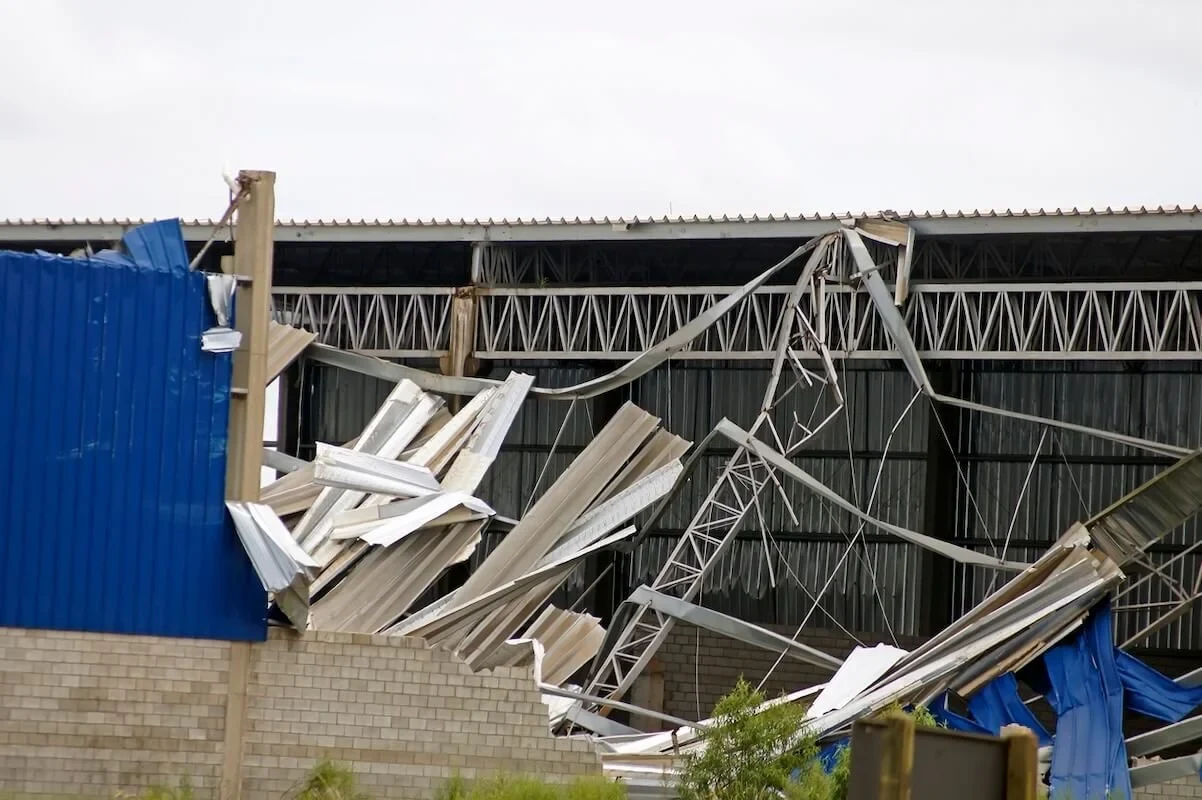
When heavy or drifted snow causes visible deflection or a partial collapse, documentation gets more technical. We photograph the affected structural members, note deflection where we can measure it, and will recommend an engineer's assessment as part of the claim record when the damage appears to involve the roof structure itself and goes beyond the membrane alone. Structural claims tend to move slower, and a clear photo record from the day damage is discovered helps establish the timeline an adjuster needs.
Wildfire and Ember Damage
Ember damage during a red flag wind event can be subtle - scorched debris in a curb corner, a small burn-through in membrane near a rooftop unit, heat-damaged flashing that isn't obviously fire-related at first glance. We document these carefully because ember damage claims are often harder for an adjuster to visually confirm than a clear wind or hail event, and clear photos with location context matter more here than almost any other claim type. We also note where debris on the roof may have contributed to how the damage occurred, since that detail is often relevant to how a claim gets reviewed.
- Dated, location-tagged photo documentation of all visible damage
- Measurements of affected roof area and any ponding or deflection
- Factual notes on likely cause based on observable evidence
- Organized report format built for adjuster review, not internal use only
- Recommendation for structural engineer involvement where warranted
- Copy of the report provided directly to the building owner for their file
For the full claim process from initial documentation through meeting the adjuster and building a complete repair scope, see our commercial roof insurance claim assistance overview, which also covers wind and storm claims and snow and ice claims in more depth.
We're your roofing contractor, not a public adjuster - we document and substantiate the roof damage so you and your adjuster work from an accurate scope.
What We Don't Do
We don't promise a claim outcome, and we won't tell an owner what an insurer is going to decide. Our job is putting together an accurate, well-organized factual record of the roof's condition and the damage we can observe. What an adjuster and insurer do with that record is between the owner and their carrier.
Working Alongside an Adjuster
We're glad to walk a roof with an adjuster directly if that's useful, pointing out specific damage and answering technical questions about roofing systems and how a given failure likely occurred. We approach that walk the same way we approach our own documentation - factual, specific, no exaggeration in either direction. If an adjuster asks a question we can't answer with certainty from the roof surface alone, we say so directly rather than guess, which tends to build more trust in the rest of the report than overstating our confidence would.
After the Claim Is Settled
Once a claim resolves, we scope and price the actual repair or replacement work based on what the roof needs, which sometimes differs from an initial estimate if further investigation during repair reveals additional damage that wasn't visible during the original documentation walk.
Documentation Support Questions
Will you tell us if our claim will be approved?
No. We document damage factually and thoroughly, but claim decisions are between the building owner and their insurance carrier.
Can you meet with our adjuster on-site?
Yes, we'll walk the roof with an adjuster and answer technical questions about the damage and likely cause based on what we observe.
How is ember damage different to document than wind or hail?
It's often more subtle - scorched debris or small burn-through areas that aren't as visually obvious as a torn membrane or dented equipment, so we document it with more location context and detail.
Do you get involved if the damage looks structural?
We document what we can observe and will recommend a structural engineer's assessment as part of the claim record whenever damage appears to go beyond the membrane itself.
Do we get a copy of the documentation for our own records?
Yes, every report is provided directly to the building owner in addition to whatever is submitted through the claim process.
Related
Ready to review the roof scope?
Request a Roof Assessment