60 Mil TPO Roofing in Bend, OR
60 mil TPO for standard low-slope commercial roofs in Bend, sized for high-desert UV exposure, freeze-thaw cycling, and Cascade snow load requirements.
Where 60 Mil TPO Fits on a Bend Commercial Roof
Sixty mil TPO is the membrane we spec most often on straightforward low-slope roofs around Bend - office buildings, retail strips, and light-industrial space that isn't carrying heavy rooftop traffic or unusual chemical exposure. It's a reliable baseline, but at 3,600 feet the way we detail and inspect it looks different than a spec sheet written for a cloudier, lower-elevation market.
A Baseline Membrane, Not a Compromise
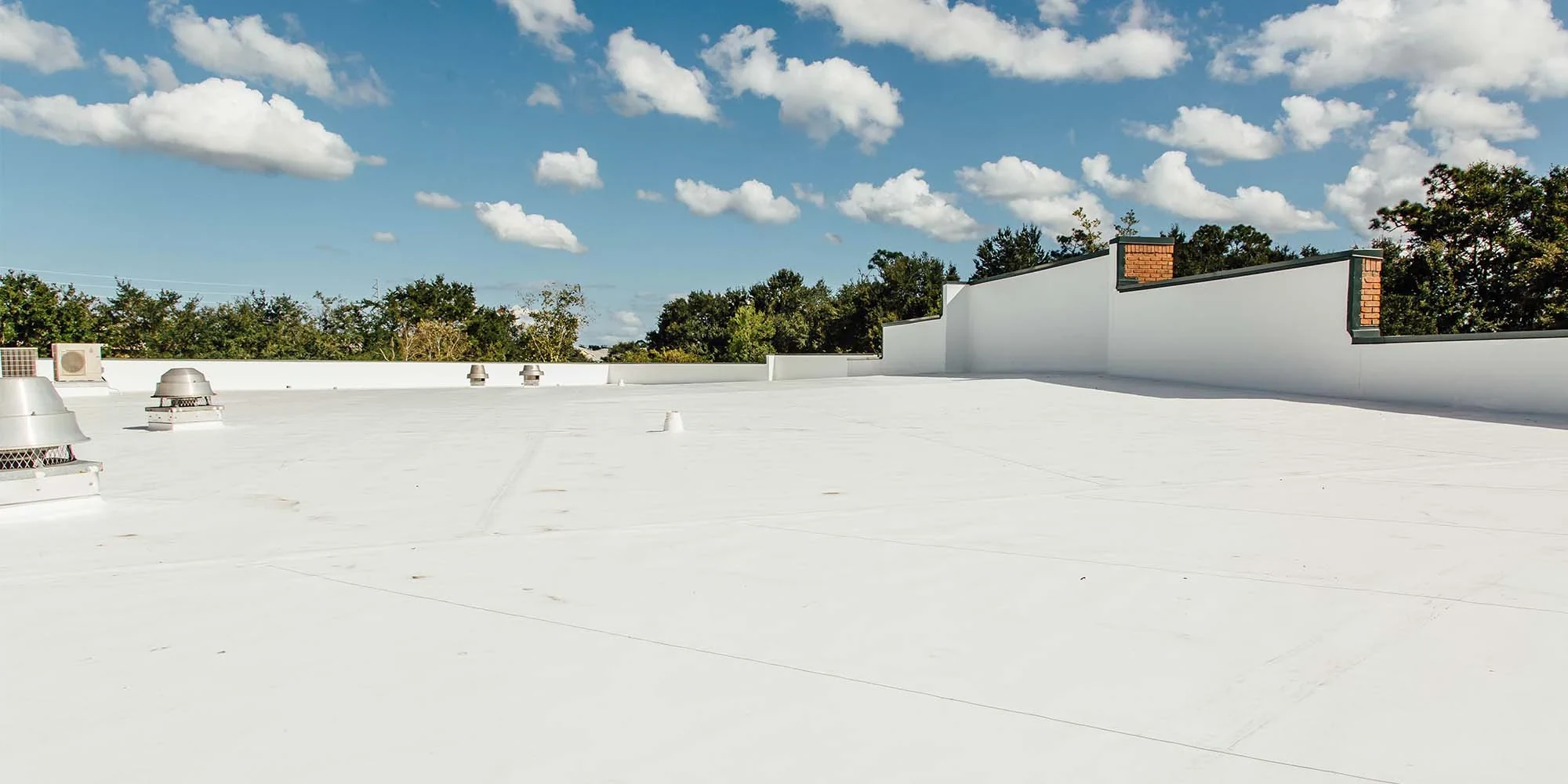
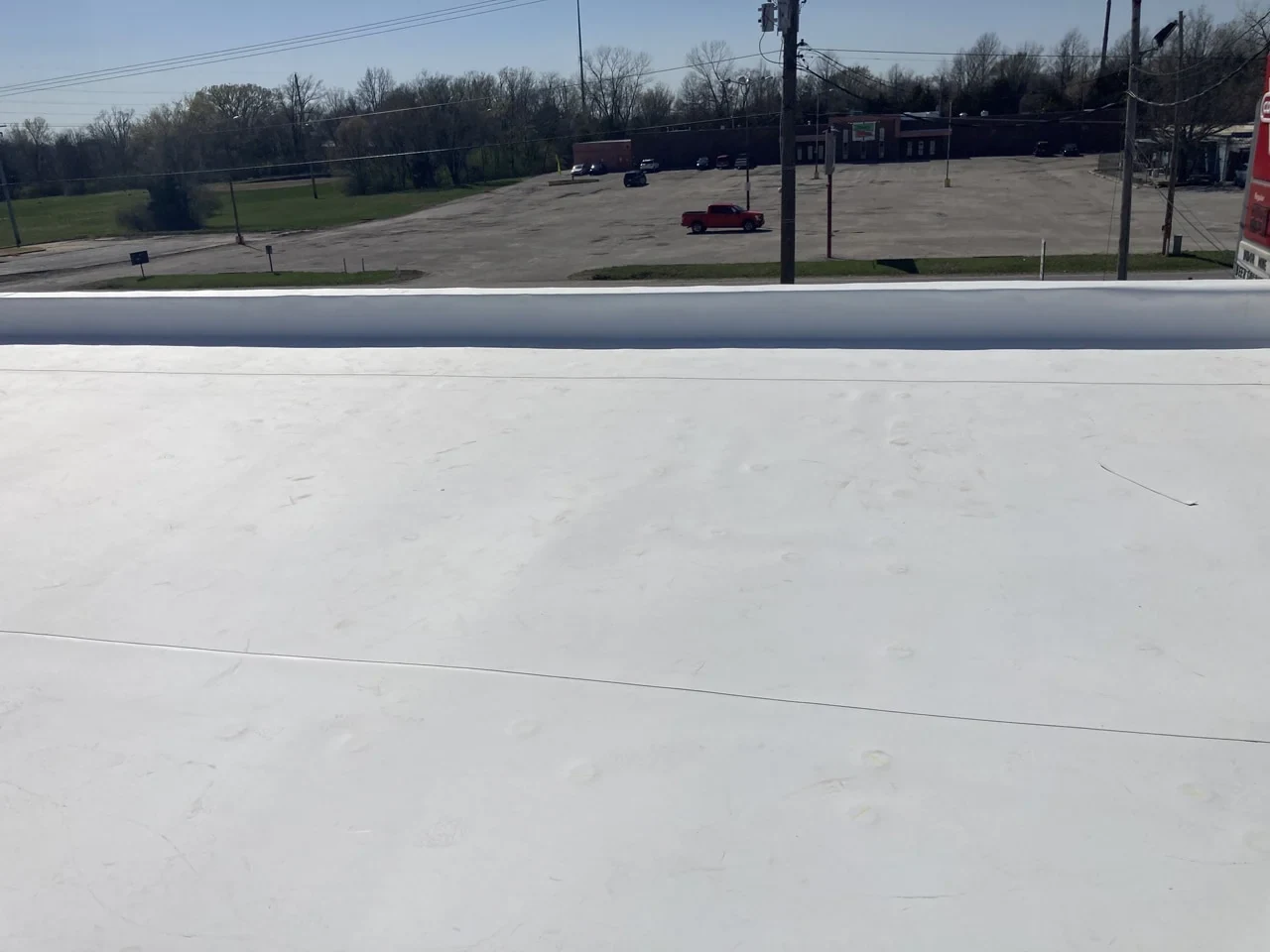
For a lot of buildings around Bend, 60 mil is the right call rather than the budget call. A retail box off the Bend Parkway with a quiet roof - no heavy mechanical traffic, no grease exposure, no unusual foot traffic - doesn't need the added mass of a heavier gauge. The membrane's reflective white surface also does real work against high-desert summer sun, keeping rooftop unit condenser coils and the deck below several degrees cooler than a dark membrane would.
Where we draw the line is roof use, not building type alone. A distribution building near Juniper Ridge with a roof nobody walks except once a year for an inspection is a good 60 mil candidate. The same footprint with a satellite dish, extra conduit, or a maintenance crew up there every month usually moves us toward a heavier membrane instead.
Hot-Air Welding on Cold Central Oregon Mornings
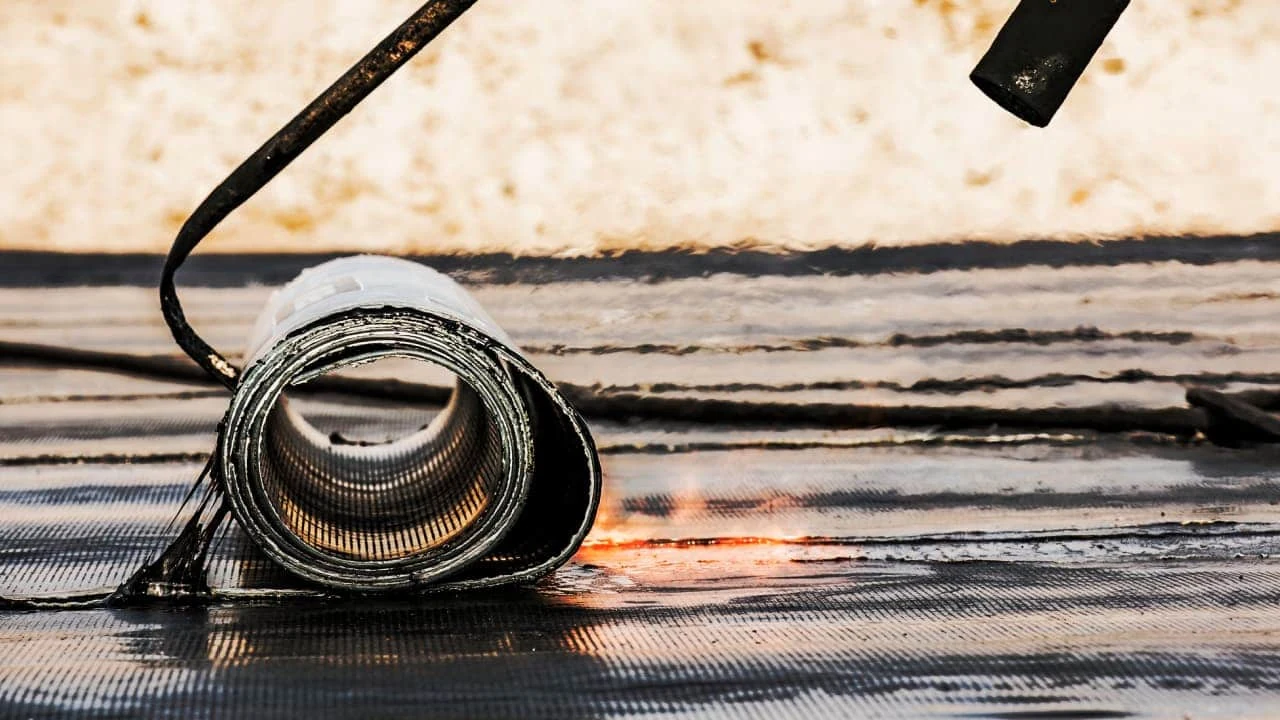
TPO seams get their strength from hot-air welding, and that process is sensitive to substrate temperature. Bend mornings can sit well below freezing even during our working season, especially in shoulder months, so crews don't start welding seams until the membrane itself has warmed enough to bond properly - the actual sheet surface, well beyond the surrounding air temperature.
We test-weld and peel-test the first seams of the day before committing to the full run, and we track overnight lows closely once a roof section is open. A seam welded too cold looks fine on the surface and fails a peel test months later, usually right when a spring thaw is pushing meltwater across it.
UV Exposure at 3,600 Feet
Thinner air at elevation filters less ultraviolet radiation than a coastal or valley-floor installation deals with, and TPO membranes here show it. We've opened up 60 mil roofs in Bend showing seam chalking and surface embrittlement earlier than the membrane's rated service life would suggest for a lower-elevation building, particularly on south- and west-facing slopes that catch the most direct exposure through the long, dry summer.
That's part of why we're careful about fastening pattern and seam overlap on 60 mil jobs here rather than treating the manufacturer's baseline spec as automatically sufficient. A slightly tighter fastening schedule and wider seam overlap cost little upfront and buy real years on the back end.
Snow and Ice at the Roof Edge
Sixty mil handles typical Cascade-region snow load fine on a properly designed structure, but the membrane detailing at parapets, scuppers, and roof edges matters more here than the field membrane itself. Snow drifts against parapet walls, melts during the day, and refreezes overnight, and that freeze-thaw cycle works on any weak point in the edge metal or termination bar faster than a steady, single winter freeze would.
We check drain and scupper sizing against expected snowmelt volume before signing off on a 60 mil install, because a membrane that's otherwise sound can still take on water if meltwater backs up faster than the roof can shed it.
What Pushes a Roof Past 60 Mil
A handful of conditions move us off 60 mil and toward 80 mil or an alternate system, and we walk owners through these before finalizing a spec rather than after a problem shows up:
- Regular rooftop foot traffic from maintenance, HVAC, or contractor access
- Heavy or growing rooftop equipment load - new units, conduit runs, dish antennas
- Grease or oil exposure near restaurant or brewery kitchen exhaust
- A history of puncture damage or storm-driven debris on that roof
- Manufacturer wind uplift ratings that specifically call for heavier gauge
- Insurance carrier requirements tied to a specific membrane thickness
Fastening and Attachment for High-Wind Days
Central Oregon gets its share of high-wind events, particularly during fall and spring weather transitions, and mechanically fastened 60 mil TPO performs well when the fastening density matches the roof's actual wind exposure - not a generic pattern pulled from a different climate zone. Parapet height, surrounding structures, and roof geometry all affect that exposure rating on a given building.
We calculate uplift zones for each roof rather than reusing a fastening pattern from the last job, because two buildings a few blocks apart can carry different exposure categories depending on what's around them. If a spec calls for fully adhered attachment instead of mechanical fastening, that decision usually comes down to deck type and insulation compatibility more than membrane thickness.
Questions Bend Building Owners Ask About 60 Mil TPO
Is 60 mil TPO durable enough for Bend's winters?
On a properly designed roof structure with correctly detailed edges and drainage, yes. The membrane thickness handles Cascade-region snow load fine - most winter problems trace back to edge detailing or drainage, not the field membrane itself.
Does high-desert sun really shorten TPO life?
We see it consistently on south- and west-facing exposures. Reduced atmospheric filtering at elevation means more UV reaches the membrane than manufacturer literature typically assumes, which is why we're conservative on fastening and seam overlap here.
Can 60 mil TPO be installed over an existing roof?
Sometimes, if the existing deck and insulation are dry and structurally sound and code allows the added layer within the building's load limits. We confirm that with core cuts before recommending a recover over a tear-off.
How cold can it be before you stop welding seams?
We go by membrane surface temperature rather than air temperature alone, and we peel-test the morning's first welds before continuing. On cold mornings that can mean starting welding work later in the day once the sun has warmed the membrane.
When would you recommend 80 mil instead of 60 mil?
Regular rooftop traffic, heavier or growing mechanical equipment, grease exposure near kitchen exhaust, or a manufacturer wind rating that specifically requires it. We price both thicknesses side by side when a roof could reasonably go either way.
Related
Ready to review the roof scope?
Request a Roof Assessment