SBS Modified Bitumen Roofing in Bend, OR
SBS modified bitumen roofing for Bend's complex roof lines, applied with cold-process methods suited to fire season and high-desert freeze-thaw cycling.
SBS Modified Bitumen for Complex Roof Lines Around Bend
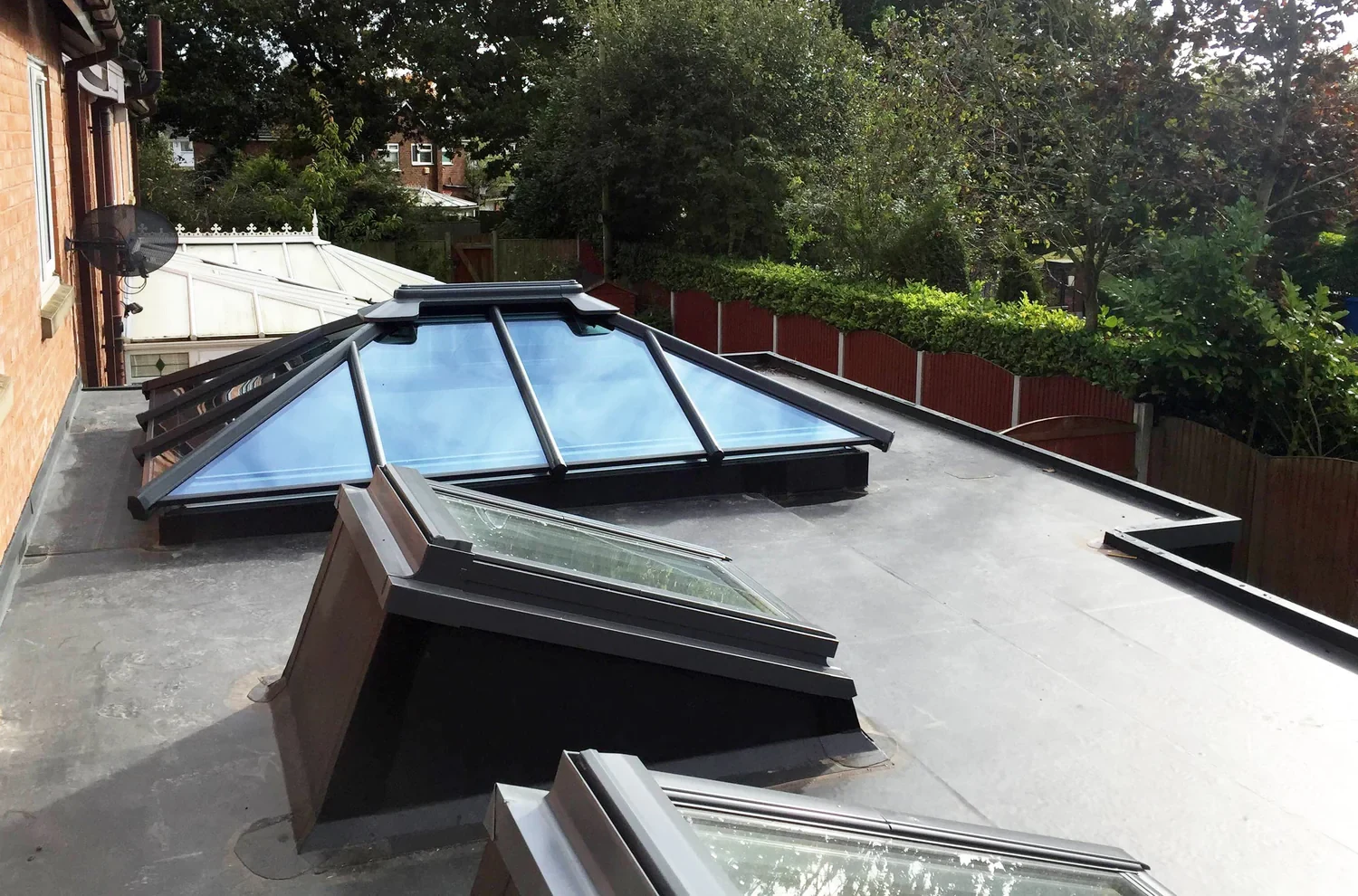
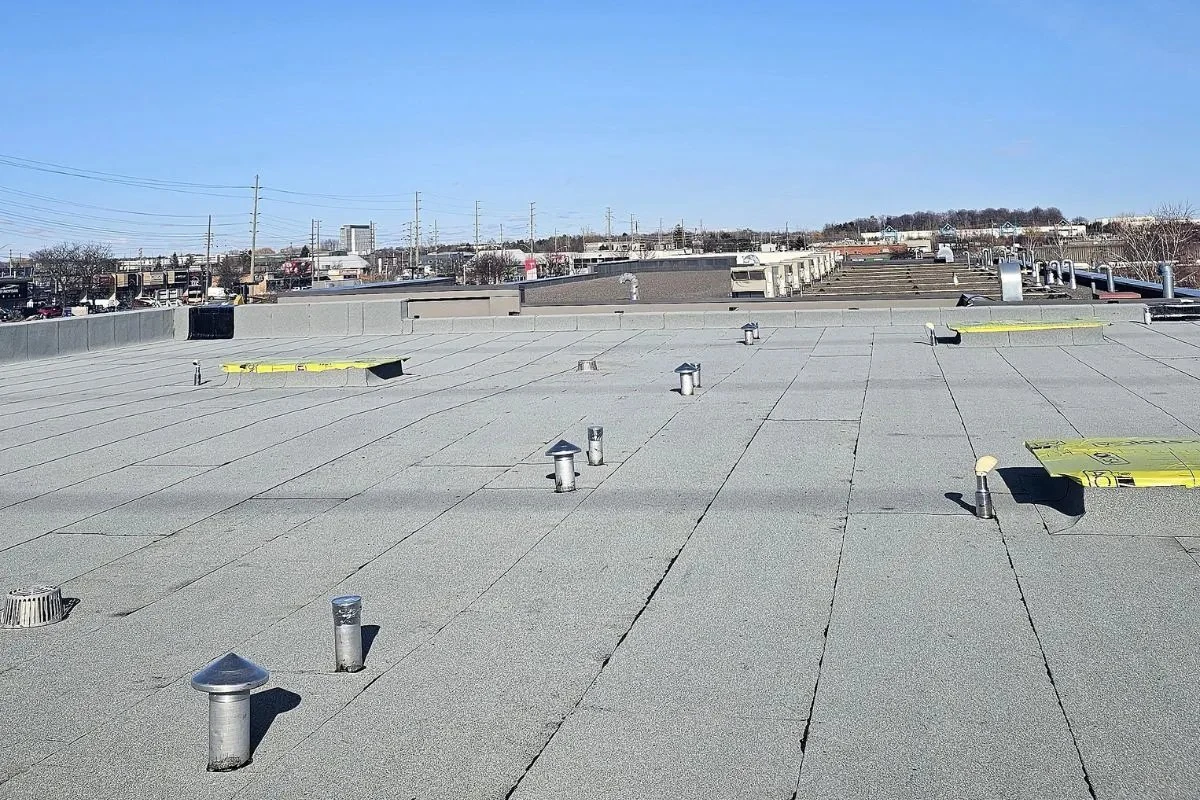
SBS modified bitumen is our go-to system on Bend roofs with irregular geometry - mountain-lodge-style buildings with multiple roof pitches, resort properties near Sunriver and Black Butte Ranch with dormers and equipment penetrations, and older downtown buildings where a single-ply membrane doesn't lay in as cleanly. The multi-ply redundancy handles that complexity better than a field-seamed single-ply sheet does.
Multi-Ply Redundancy on Complex Roof Geometry
A roof with multiple planes, crickets, curbs, and equipment penetrations has more seam length and more transition points than a simple rectangular footprint, and every one of those transitions is a potential leak path. SBS modified bitumen's layered base sheet and cap sheet construction gives redundancy at those transitions that a single-ply membrane can't match, since a flaw in one layer doesn't automatically mean water reaches the deck.
We see the most value in this on hospitality properties out toward Sunriver and Black Butte Ranch, where lodge-style architecture often means a roof built in sections over years of additions rather than one continuous plane, and on older buildings downtown with rooftop mechanical clusters that have grown piecemeal over time.
Cold-Applied Methods Near the Wildland-Urban Interface
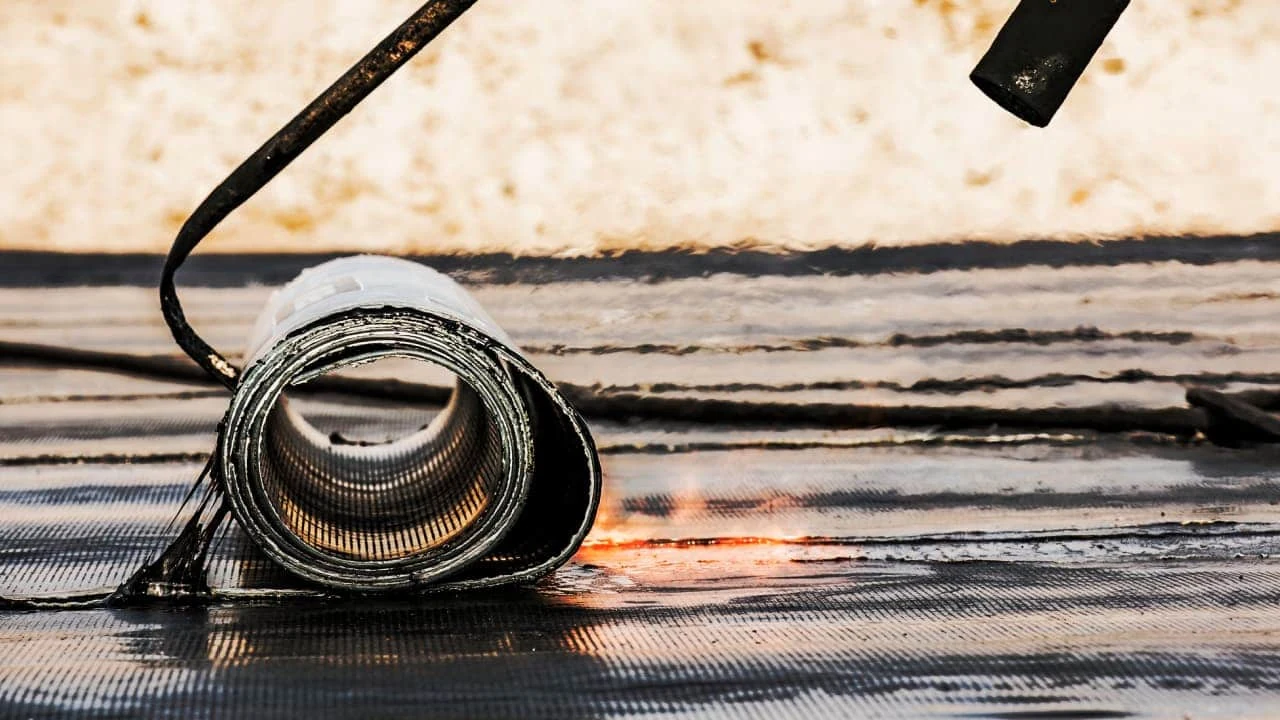
Central Oregon's fire season and the amount of ponderosa pine and juniper forest surrounding much of Bend make open-flame torch application a real liability on plenty of jobs, particularly during the dry summer stretch when fire restrictions tighten. We use cold-applied adhesive and self-adhered modified bitumen systems on projects where torch work isn't appropriate, which covers most of what we do here.
Cold-applied SBS gives up a little installation speed compared to torch-applied systems, but it removes the open-flame risk entirely on a roof surrounded by dry vegetation or sitting near buildings the fire marshal doesn't want exposed to hot work. We plan install schedules around that method from the start rather than treating it as a fallback.
Granulated Cap Sheet Performance in High-UV Sun
The mineral granules embedded in an SBS cap sheet do real work protecting the asphalt layer underneath from Bend's intense summer UV exposure. At roughly 3,600 feet, thinner air filters less ultraviolet radiation than a coastal or valley-floor market, and a cap sheet without adequate granule coverage degrades faster here than manufacturer literature written for a lower-elevation climate would suggest.
We check granule adhesion and coverage during inspections on older SBS roofs, since granule loss exposes the underlying asphalt to direct UV and accelerates surface cracking. A roof shedding granules into the gutters or scuppers is telling us something worth acting on before it becomes a leak.
Freeze-Thaw Behavior of Built-Up Assemblies
Central Oregon's freeze-thaw cycling - hard overnight freezes followed by daytime thaw, repeated through winter and into spring - works differently on a multi-ply asphaltic system than it does on a single-ply membrane. Water that finds its way between plies through a flaw can freeze and expand, working the layers apart from the inside rather than failing at a surface seam the way a single-ply system typically would.
That's part of why flashing detail quality matters so much on an SBS install here. Clean, properly lapped flashing at curbs, parapets, and penetrations keeps water out of the assembly in the first place, which matters more on a multi-ply system than trying to catch a freeze-thaw problem after it's already inside the roof.
Where SBS Fits Alongside Single-Ply Options
We don't default to SBS across the board - on a straightforward rectangular low-slope roof with minimal penetrations, single-ply TPO or PVC usually installs faster and costs less. SBS earns its place on specific conditions:
- Complex roof geometry with multiple planes, dormers, or additions over time
- Lodge or resort-style buildings with heavy equipment penetration counts
- Roofs where open-flame torch application is restricted by location or fire risk
- Buildings needing extra redundancy due to occupied space directly below
- Older roofs being recovered where the existing assembly favors a multi-ply match
- Situations calling for a granulated, self-protecting cap sheet over a coated finish
Coordinating SBS Work Around a Short Build Season
Bend's dependable roofing window runs roughly May through early October before hard overnight freezes start affecting adhesive cure on cold-applied systems. On complex lodge or resort roofs, we phase the work section by section and dry each area in before moving to the next, since an open multi-ply roof left exposed overnight is more vulnerable to moisture intrusion than a single membrane sheet would be.
We also track extended forecasts closely once a section is opened, because a cold-applied adhesive that hasn't cured properly before an unexpected freeze can affect the assembly's long-term bond strength.
Questions About SBS Modified Bitumen in Bend
Why choose SBS over single-ply on a complex roof?
The layered construction gives redundancy at seams and transitions that a single-ply membrane doesn't have, which matters more on roofs with multiple planes, curbs, and penetrations than on a simple rectangular footprint.
Do you use torch-applied SBS in Bend?
Rarely. Given the amount of dry forest surrounding much of the area and fire season restrictions, we favor cold-applied and self-adhered modified bitumen methods on most projects here.
Does granule loss on an SBS roof mean it needs replacing?
Not automatically, but it's worth inspecting. Granule loss exposes the underlying asphalt layer to direct UV, which accelerates surface aging, so we check coverage and adhesion closely once granules start showing up in drains or gutters.
How does freeze-thaw cycling affect a multi-ply roof?
Water that gets between plies through a flaw can freeze, expand, and work the layers apart from the inside. That's why clean flashing detail at curbs and penetrations matters so much on an SBS install here.
Can SBS be installed on a roof with an existing asphaltic system?
Often yes, if the existing deck and insulation are dry and structurally sound. We confirm that with core cuts before recommending a recover over a full tear-off.
Related
Ready to review the roof scope?
Request a Roof Assessment