Spray Polyurethane Foam Roofing in Bend, OR
Spray polyurethane foam roofing for Bend buildings with irregular roof lines, chosen for insulation value through cold winters and easy recoat cycles.
Spray Foam Roofing for Bend's Irregular Roof Lines
Spray polyurethane foam is the system we reach for on Bend roofs where a conventional membrane would fight the roof's own shape - buildings with additions stacked on over the years, uneven decks, or a lot of small penetrations packed close together. The foam self-flashes around those details in a way that a sheet membrane simply can't match, and it adds real insulation value on top of that.
Foam's Fit on Irregular and Retrofit Roofs
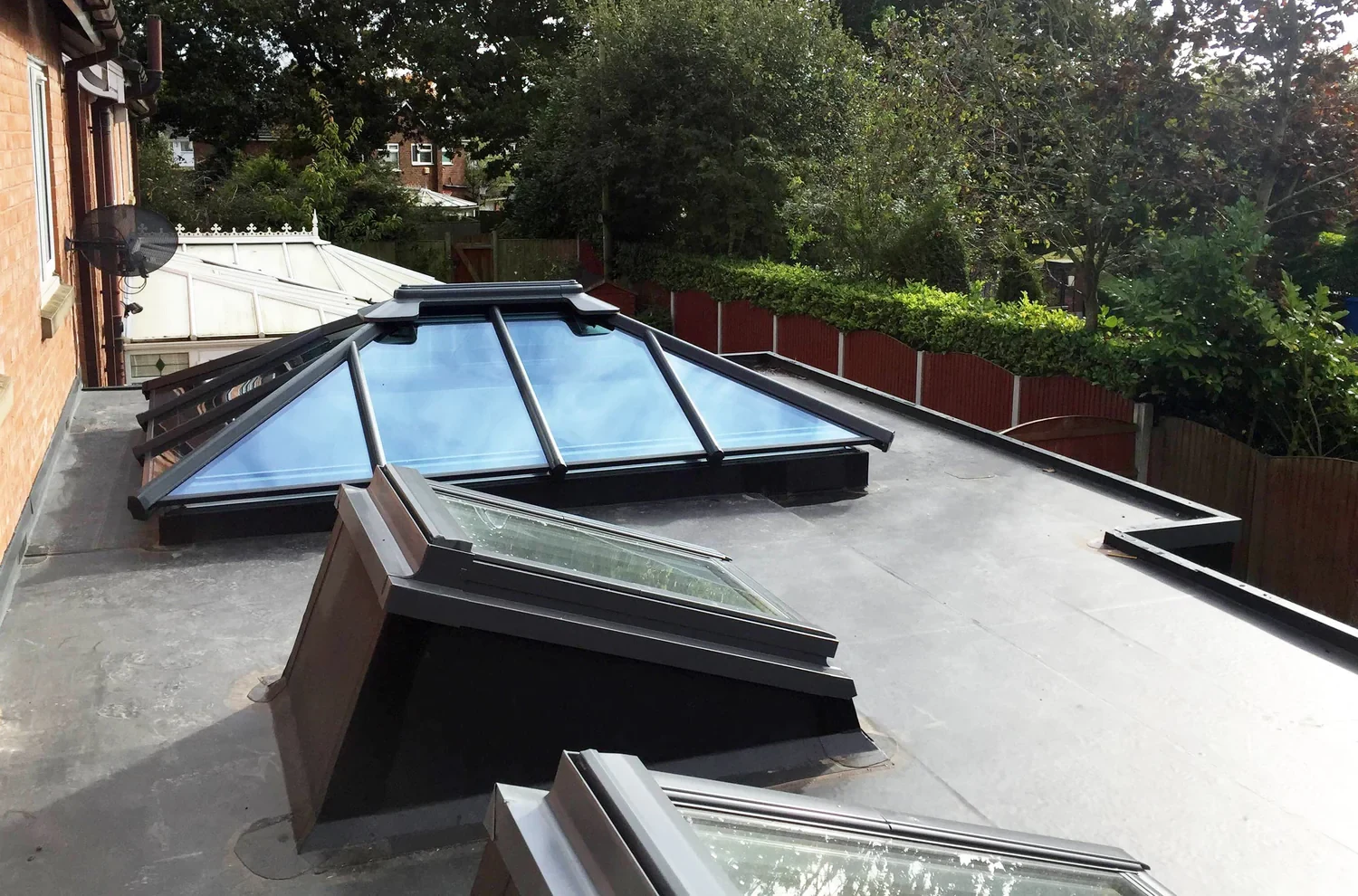
A lot of older commercial buildings around Bend - particularly lodging and hospitality properties near Sunriver and the Old Mill District that have expanded piecemeal over the years - end up with roof decks that aren't one clean plane anymore. Multiple roof heights, offset additions, and clusters of rooftop equipment installed at different points in the building's history all make a field-seamed membrane harder to detail cleanly.
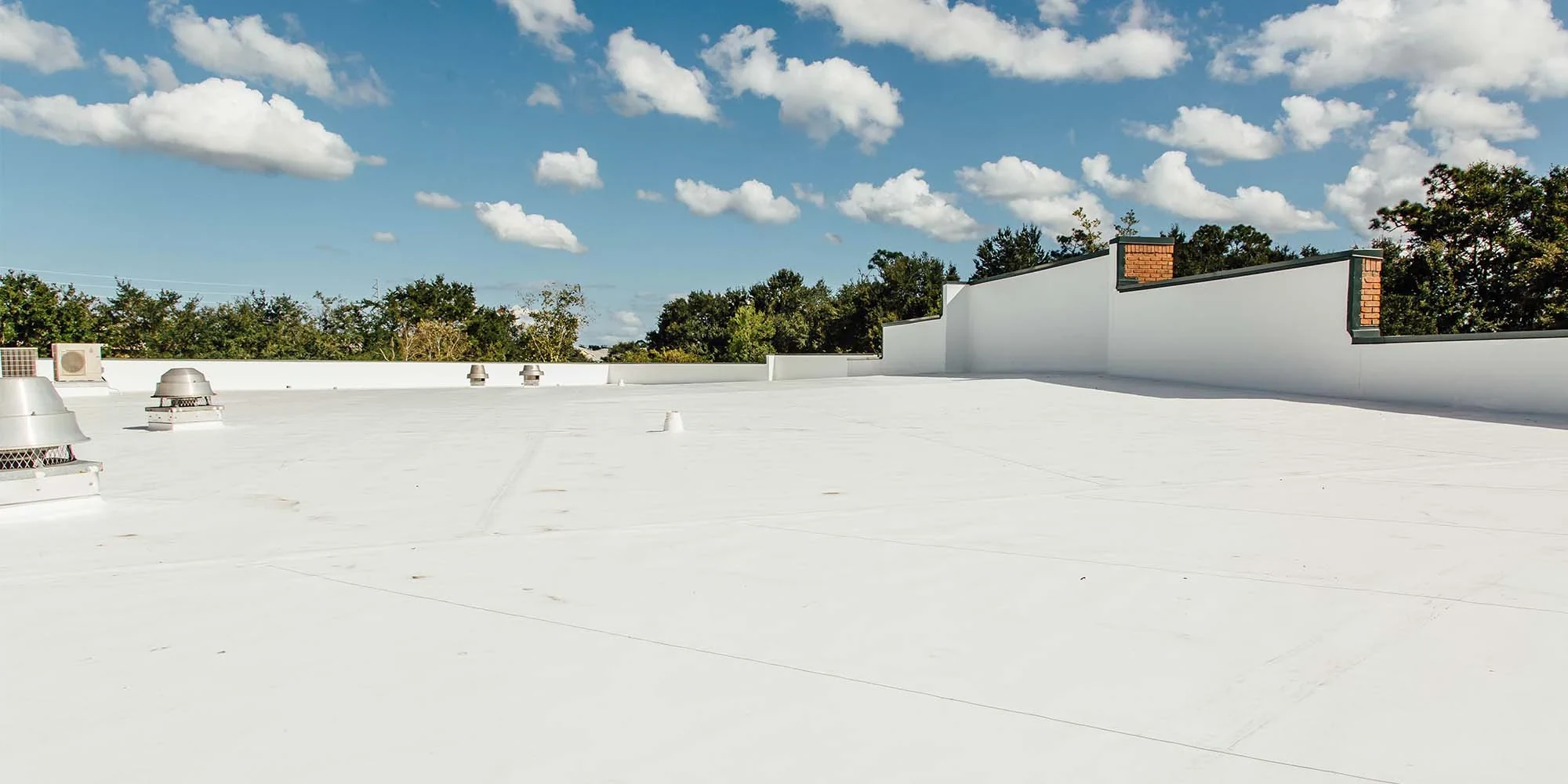
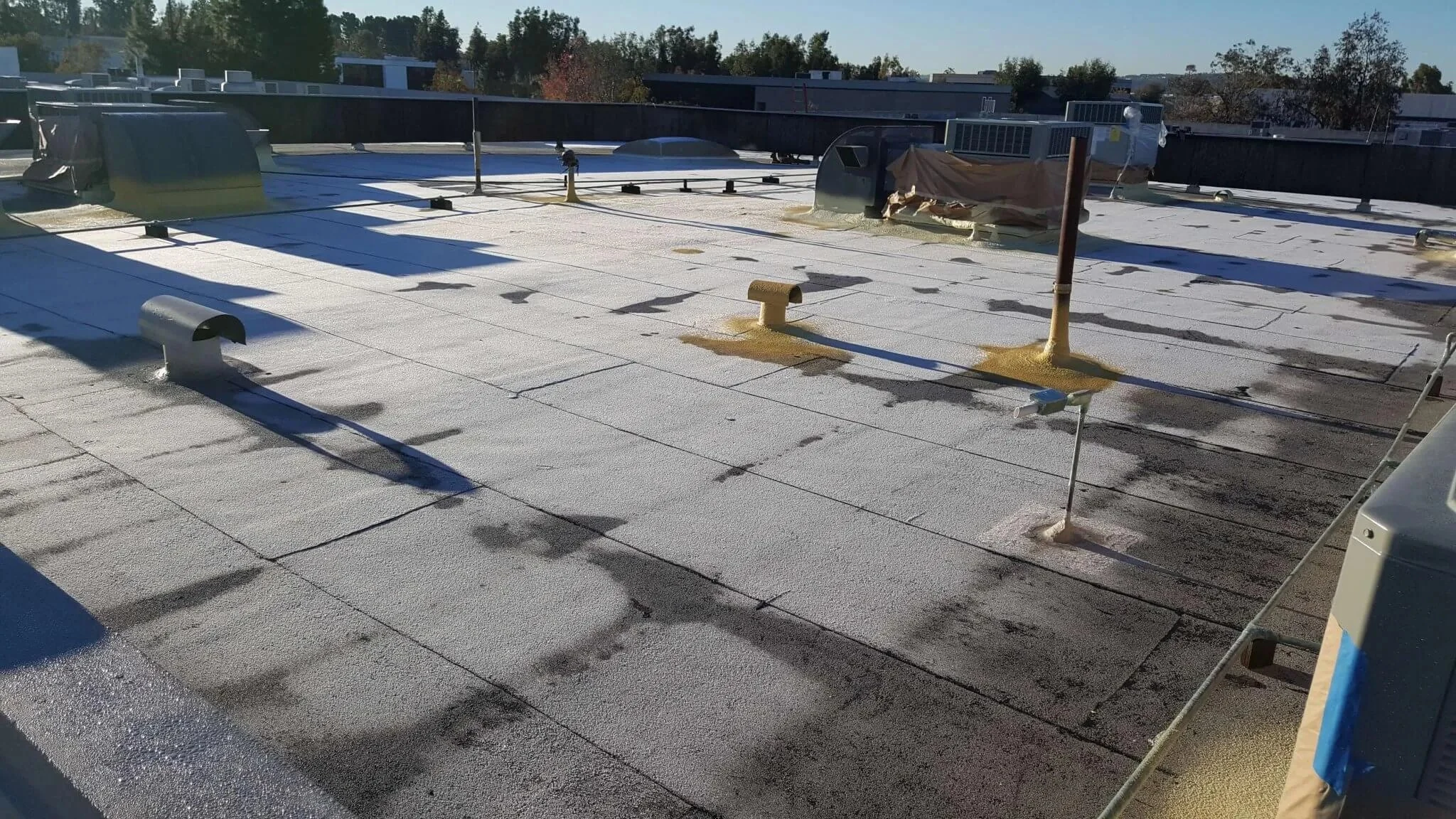
Sprayed foam conforms to that irregularity as it's applied, filling low spots, building positive slope toward drains where the existing deck doesn't have any, and self-flashing around penetrations without the seam count a sheet membrane would need on the same roof. That's the biggest reason we recommend it over single-ply on genuinely complicated roof geometry.
Insulation Value During Cold High-Desert Winters
Foam does double duty as roof membrane and insulation, adding real R-value directly at the roof deck rather than requiring a separate insulation layer underneath a membrane. On a Bend building working to control heating costs through a cold winter with hard overnight freezes, that combined function can meaningfully reduce heat loss through the roof compared to an older, under-insulated assembly.
We size foam thickness to the specific building's insulation needs and existing roof condition rather than applying a standard depth across every job, since an older building with minimal existing insulation gets more benefit from foam's added R-value than a newer, already well-insulated structure would.
Recoat Cycles and UV Protection
Foam itself needs a protective coating on top - it isn't UV-stable on its own, and at Bend's elevation, where thinner air filters less ultraviolet radiation than a coastal or valley-floor market, an unprotected or under-coated foam roof degrades quickly under direct sun. We apply a silicone or acrylic topcoat over the foam and reapply that coating on a maintenance cycle well before the underlying foam is at risk of exposure.
That recoat cycle is a real ongoing maintenance commitment, and we're upfront with owners about it before recommending foam - it isn't a system you install and forget. Skipping a scheduled recoat is the most common reason a foam roof underperforms its expected service life here.
Foam on Resort and Lodge Buildings With Additions Over Time
Resort and hospitality properties around Bend often grow in stages - a lodge building gains a conference wing, then a kitchen expansion, then rooftop mechanical upgrades, each addition tied into the existing roof at a different point. That kind of layered construction history is exactly where foam earns its keep, smoothing transitions between roof sections that would otherwise need extensive flashing work to tie together cleanly with a sheet membrane.
We've applied foam over roofs like this specifically because the alternative - detailing dozens of transitions and penetrations with membrane flashing - would cost more in labor and leave more seams as potential leak points than a monolithic sprayed system would.
Moisture and Application Timing Windows
Spray foam application requires a dry substrate and stable weather during application and initial cure, which narrows our working window to Bend's dependable dry stretch, roughly May through early October. Applying foam over a damp deck traps moisture underneath, and a foam roof with trapped moisture underneath is a harder problem to diagnose and fix than a standard membrane leak.
A few conditions we confirm before scheduling a foam application:
- Deck moisture levels checked and confirmed dry before spraying begins
- Stable forecast with no rain or freeze risk during application and initial cure
- Existing roof penetrations and equipment curbs mapped for foam thickness planning
- Drainage slope requirements confirmed for areas needing positive slope built in
- Wind conditions suitable for overspray control near adjacent buildings or parking
- Topcoat compatibility confirmed for the specific foam product being applied
Comparing Foam to a Membrane Recover
Foam isn't the right call on every irregular roof - a straightforward recover with a conventional membrane can still be the more cost-effective option if the existing roof's geometry isn't too complicated and the deck is in decent shape. We compare both options directly on any roof where foam is a candidate, rather than defaulting to foam because the roof has some complexity to it.
Where foam clearly wins is on roofs with enough irregular detail - additions, penetration clusters, uneven decks needing drainage correction - that a membrane recover would require extensive custom flashing work to match the foam's self-flashing advantage.
Questions About Spray Foam Roofing in Bend
How often does a foam roof need to be recoated?
It depends on the topcoat product and yearly UV exposure, but we build a recoat schedule into the maintenance plan from the start rather than waiting until the foam shows visible wear.
Does foam work well on a roof with a lot of rooftop equipment?
Yes, that's often where it performs best. Foam self-flashes around penetrations and equipment curbs in a way that reduces the seam count a sheet membrane would need on the same roof.
Can foam be applied over an existing membrane?
Often yes, if the existing roof is dry and structurally sound. We confirm deck and insulation condition before recommending foam as a recover option.
What happens if moisture gets trapped under the foam?
It becomes a harder problem to diagnose than a standard membrane leak, since foam doesn't show the same visible signs of trapped moisture. That's why we confirm the deck is dry before spraying begins.
Is foam a good fit for a simple rectangular roof?
Not usually the best choice there. A straightforward membrane recover is often more cost-effective on a simple roof geometry. Foam earns its cost on roofs with real complexity.
Related
Ready to review the roof scope?
Request a Roof Assessment