Warehouse Roofing in Bend, OR
Warehouse roofing spread across Redmond, Prineville, Juniper Ridge, and Deschutes Junction, priced from deck condition and high-desert loading first.
Warehouse Roofs Scattered From the Ridge to the Runway to the Server Farms
Bend's warehouse and light-industrial roof stock doesn't sit in one place. It's split between the airport-corridor logistics buildings in Redmond, the storage and support buildings filling in around Prineville's data center campuses, the newer construction on Juniper Ridge, and the older scattered stock strung along Highway 97 at Deschutes Junction. We price all of it the same way, starting with deck condition and elevation-specific loading, membrane brand a distant second.
Redmond's Airport-Corridor Distribution Buildings
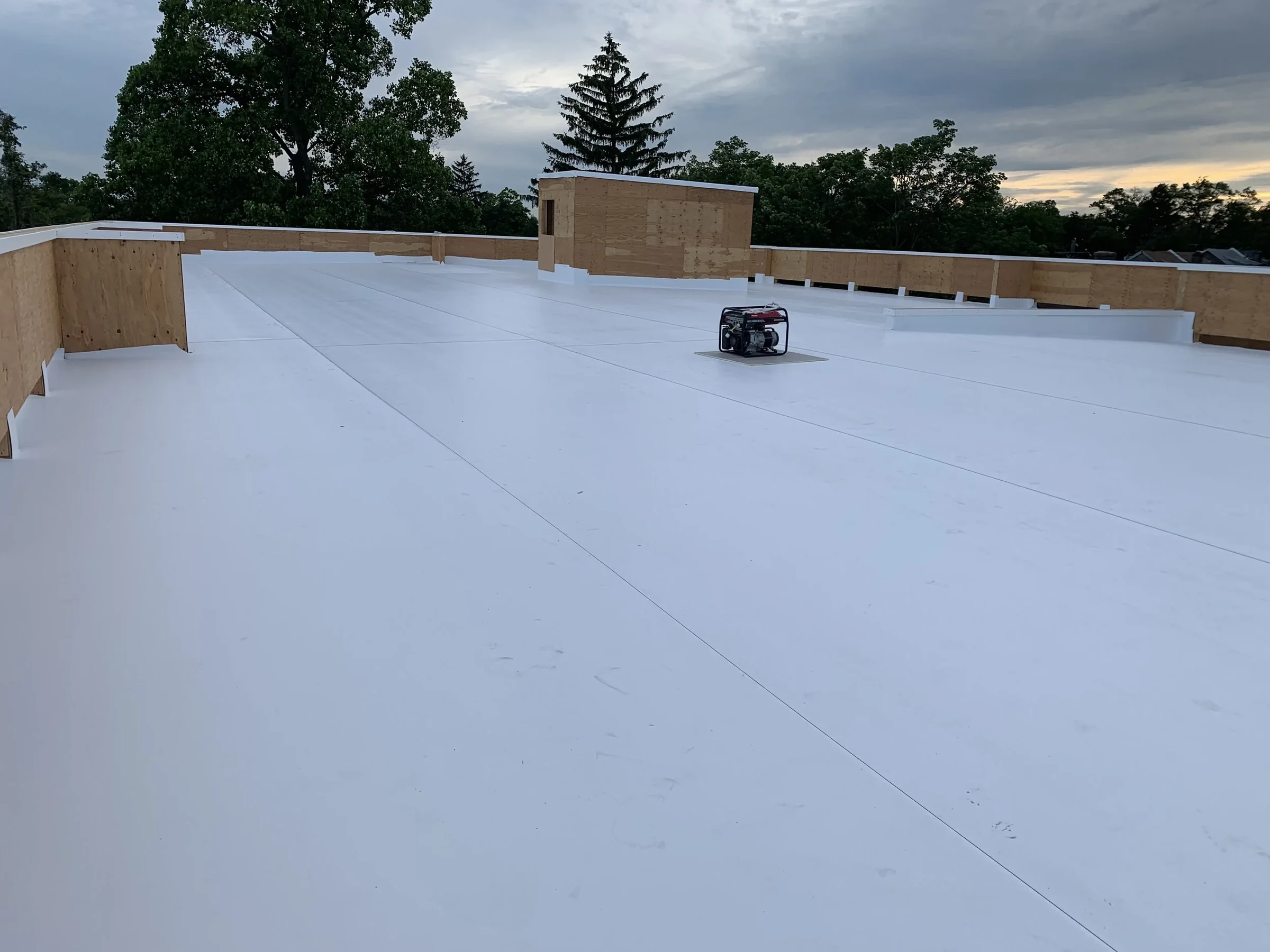
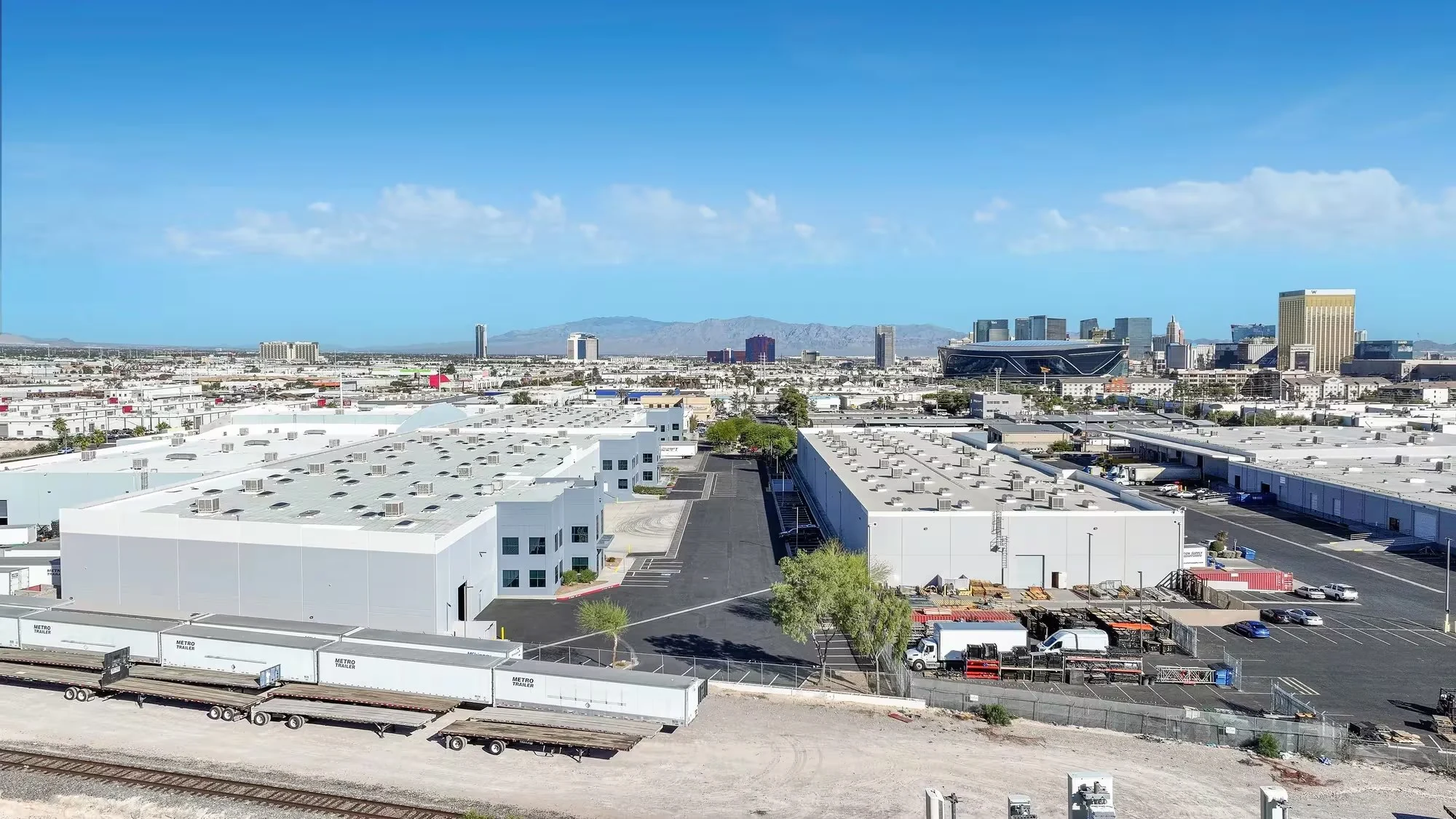
The industrial parks ringing Redmond Municipal Airport carry a lot of clear-span distribution square footage, most of it dock-high with deep bays built for trailer turnaround rather than foot traffic. These are newer buildings, put up for logistics tenants who needed floor space over finish, and the roofs over them are almost uniformly low-slope single-ply over open steel deck.
Open, flat terrain near the runway means wind exposure runs higher here than in town, and fastener pattern matters more on a Redmond building than on something tucked behind other structures downtown. We check pull-out resistance on every Redmond bid rather than assume the original spec held up, since a building sited for maximum wind exposure needs a roof edge and field attachment rated for it, not a generic uplift number off a spec sheet.
Prineville's Storage and Support Buildings Near the Data Center Campuses
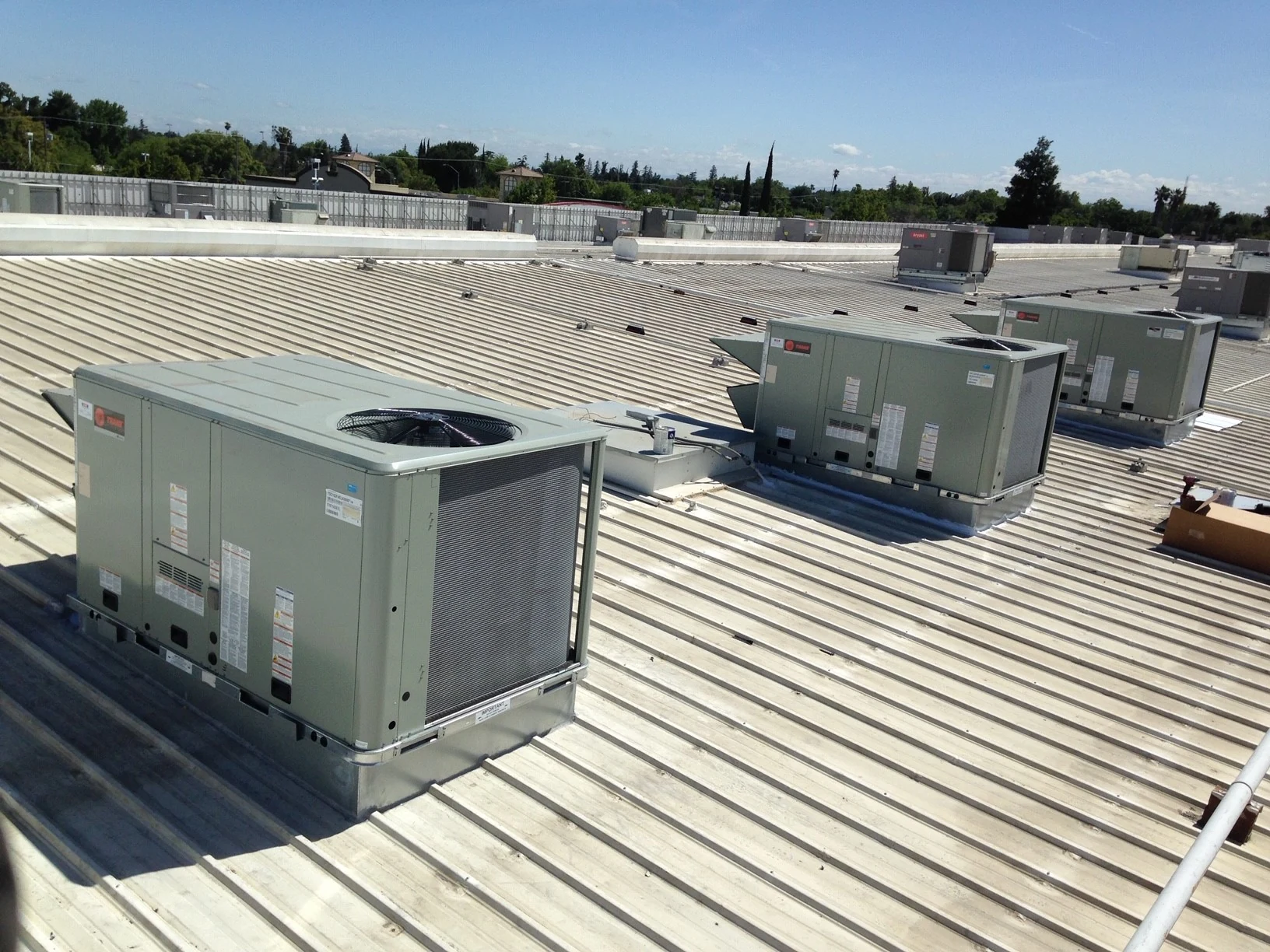
We don't work on the data centers themselves, but the storage yards, logistics buildings, and vendor support structures around them are a real and growing share of our Prineville bids. That construction sits next to older timber-industry buildings that predate it, and the two eras don't roof the same. The newer support buildings tend to carry heavier mechanical loads on the roof deck than a standard warehouse, driven by cooling and backup power equipment mounted up top rather than at grade.
Security fencing and restricted-access yards around that campus footprint change how we stage a job more than they change the roof spec itself. We plan material staging and crew access around those perimeters up front, because a Prineville bid that ignores site access ends up costing more in lost crew hours than it saves on paper.
Juniper Ridge and Deschutes Junction: Two Different Ages of Industrial Stock
Juniper Ridge is where most of the new construction has gone, and the buildings there tend to be office-warehouse hybrids or light manufacturing space with tighter insulation packages and cleaner roof penetrations, since they were designed as one project rather than built up piecemeal. We still run a full deck check before quoting, because even a newer building can hide a bad tie-in at a parapet or a rooftop unit set on a curb that was never properly flashed.
Deschutes Junction, out at the Highway 97 interchange, is a different story. That commercial-industrial cluster grew in fits and starts over several decades, and the roofs reflect it: partial recovers layered over older built-up systems, scuppers added after the fact when drainage proved inadequate, curb flashing patched by whoever was on the roof last rather than a crew working from a plan. We spend more time on a Deschutes Junction walk-through for exactly that reason.
An owner buying in either district should expect a different conversation. Juniper Ridge is usually about protecting a roof that's mostly sound; Deschutes Junction is usually about figuring out how much of the existing system is worth keeping before a full tear-off becomes the honest answer.
Snow Drift Loading on Big Flat High-Desert Roofs
An acre of flat warehouse roof doesn't carry snow evenly. It drifts against parapet walls and rooftop equipment, and on a building this size the drift piled against a wall can run two or three times deeper than what's sitting across the open field a hundred feet away. That difference matters structurally more than cosmetically, and it's the first thing we check on any warehouse walk-through before membrane comes up.
Before we put a number on a warehouse or industrial roof, this is the sequence every time:
- Steel deck integrity at every drain, curb base, and parapet tie-in
- Fastener pull-out rating checked against actual site wind exposure, not a catalog default
- Rooftop equipment history - what's been added since original construction and how it was flashed
- Drift accumulation pattern against parapets and equipment clusters from prior winters
- Drainage capacity measured against the roof's current footprint, not the original design
- Membrane surface condition across the open field versus at seams and penetrations
Rooftop units set on curbs sized for an average winter are a recurring find on our inspections. A curb that's too short gets buried and iced over most years, which shortens equipment life and stacks weight where the structure already carries the deepest drift. Raising the curb usually costs less than owners expect once it's flagged, and it's cheaper done ahead of a failure than after one.
UV at Elevation, Freeze-Thaw at the Curbs, and Dry-Summer Thermal Shock
Bend sits above 3,600 feet, and the UV exposure at that elevation ages an exposed membrane field noticeably faster than the same roof would age at sea level. We factor elevation into expected service life on every quote alongside square footage and slope, because a membrane rated for twenty years in a lower, hazier climate doesn't reliably get there here.
Freeze-thaw cycling does its damage in a narrower spot: curb flashings and scupper outlets, where meltwater collects and refreezes overnight in the seams that are hardest to keep watertight in the first place. A scupper draining fine in October can be splitting its flashing by February if that cycle runs unchecked, which is why we check those details specifically rather than trusting a general membrane inspection to catch them.
Summer brings a different stress that has nothing to do with snow. High-desert days swing from cold nights into intense daytime heat, and that daily expansion-and-contraction cycle works a membrane harder over a dry Bend summer than a milder, humid climate would. We watch for seam fatigue and fastener backout tied to that thermal cycling on roofs that have gone a few summers without a walk, since it shows up as a slow, cumulative problem rather than a single failure.
Questions Warehouse Owners Ask Before a Bend Contract Gets Signed
Do your crews need special clearance to work near the Redmond airport?
We coordinate site access and staging with the property manager or tenant ahead of time, same as any secured or restricted site. It's a scheduling detail, not a reason to slow the estimate down.
How do you handle a summer tear-off with the temperature swings we get out here?
We watch the forecast for the cold-night, hot-day pattern and adjust adhesive and membrane handling accordingly. A dry Bend summer usually gives us a wide working window, but we won't lay material outside the manufacturer's temperature range just to hit a date.
Our building sits next to the Prineville data center support yards. Does that change the roof spec?
It can change access planning and, sometimes, rooftop equipment loading if your building supports mechanical or backup power gear. The membrane spec itself usually stays standard; the staging plan is what shifts.
The roof at our Deschutes Junction building has been patched for twenty years. Is it worth saving?
Sometimes. We check deck condition under the patches before answering that question, because a sound deck under a rough-looking membrane can often take a recover, while a corroded deck under a clean-looking membrane usually can't.
Do you document storm damage for insurance the same way on every building?
We document what we find on the roof - photos, measurements, deck condition - so you and your adjuster are working from the same facts. We don't make promises about how a claim gets decided.
Related
Ready to review the roof scope?
Request a Roof Assessment