Brewery and Distillery Roofing in Bend, OR
Roofing for Bend's brewery district, planned around steam venting, rooftop CO2 and refrigeration gear, and high-desert UV cycling on membrane and coating.
Roofing the Brewhouses That Built Bend's Beer Reputation
Bend calls itself a beer city for good reason, and every brewery roof we've worked on carries its own set of rooftop penetrations that a standard retail building never sees. Steam vents, glycol chillers, CO2 tanks, and grain-handling equipment all punch through the same membrane, and that membrane has to survive both the equipment load and the high-desert sun above it.
A Brew District That Grew Building by Building
From the original brewhouse near the Old Mill area to the production and taproom buildings that followed east of downtown, most of the breweries in this market started in one structure and added cooler space, canning lines, or barrel storage as demand grew. That growth pattern means roofs here often carry three or four generations of penetrations layered onto an original field that wasn't designed for any of them.
We map every rooftop addition against the original roof plan before quoting repair or replacement work, because a compressor pad added five years after construction rarely shows up on record drawings, and a flashing detail installed without a roofer on site is a common failure point we find during inspection.
Taproom expansions add their own wrinkle. A brewery that started as a small production space and later opened an event patio or expanded seating area often ends up with a roof section over the taproom that was built to a different standard than the original brewhouse roof next to it. We evaluate those two roof sections separately even when they sit on the same building, since the taproom side usually carries lighter equipment loads but more foot traffic from rooftop deck access or maintenance visits tied to HVAC serving the public space.
Heat and Moisture Loads a Retail Roof Never Sees
Brewhouse steam venting and kettle exhaust push warm, moist air through roof penetrations at a volume most commercial buildings don't generate. That moisture condenses on the underside of the deck in cold weather if the vapor path isn't handled correctly, and we've opened up roof sections where interior condensation had done more damage than any exterior leak.
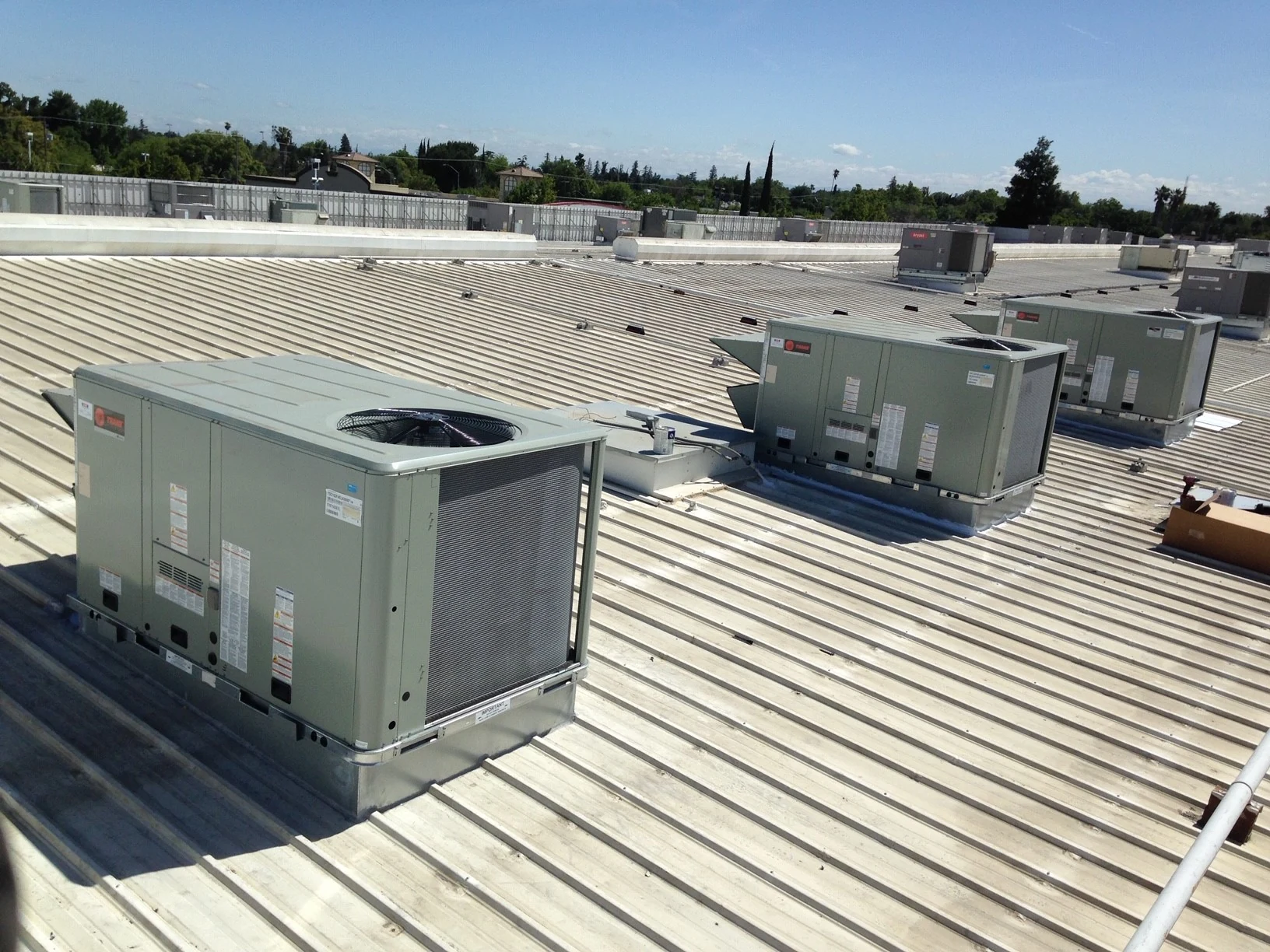
Walk-in cooler and glycol chiller units add their own weight and vibration load at the curb. We check curb flashing and fastener integrity on those units specifically, since vibration loosens fastener rows faster than static rooftop equipment does.
UV and Temperature Swings Age Coatings Fast at This Elevation
A production brewery roof at elevation takes intense UV during the day and a sharp temperature drop after sundown, and that daily swing puts real stress on membrane seams and any applied coating. We've seen coatings on brewery roofs here fail years ahead of the warranty simply because the product wasn't rated for the thermal cycling this high desert produces.
Reflective coatings can help with rooftop equipment heat load in the production area, but only if the substrate is sound underneath. We won't coat over a membrane that's already showing seam stress, because a coating hides a problem instead of fixing it.
Corrosive Exhaust Near Stacks and Vents
Exhaust and steam stacks carry mild corrosive byproducts that concentrate right around the penetration, and metal flashing in that zone corrodes faster than the same material elsewhere on the roof. We inspect stack flashing on a shorter cycle than the rest of the field on any working brewhouse roof, and we spec corrosion-resistant metal on new installations rather than matching whatever was used originally if it's shown wear.
Planning a Reroof Around Production Schedules
A brewery can't shut down the brewhouse for a roof project, so every scope we write accounts for what has to keep running underneath us. The walk-through before pricing covers the same points regardless of building size:
- Steam and kettle exhaust penetrations, condensation risk, and vapor path
- Glycol chiller and cooler curb flashing under vibration load
- CO2 tank pad anchoring and clearance from membrane seams
- Stack and vent metal corrosion at exhaust points
- Coating or membrane UV rating against elevation exposure
- Access and staging that keeps taproom and production areas clear
That list is what separates a brewery quote from a generic commercial estimate, and skipping it is how owners end up with a roof that's rated for a building that doesn't vent steam through it.
Bend's brewery footprint has grown well beyond the original handful of production houses near downtown, with newer taprooms and canning operations spreading east as the industry has expanded. Each new facility we look at tends to bring a slightly different combination of kettle size, cooler capacity, and packaging equipment, so we don't quote a brewery roof off a template built for the shop down the street.
What Brewery Owners Usually Want to Know
Can you work on the roof while the brewhouse is running?
Most repair and coating work can happen around production if we coordinate exhaust and access timing with your brewing schedule ahead of time.
Why does our roof show wear faster near the kettle vents?
Steam, heat, and mild corrosive byproducts concentrate at those penetrations, aging membrane and metal faster there than across the open field.
Does adding a canning line or cooler change our roof plan?
Yes. New curb weight, vibration, and penetration count all factor into flashing detail and sometimes structural review before equipment goes up.
Is a coating a good option for our brewery roof?
Only if the membrane underneath is sound. We check seam and substrate condition before recommending a coating over a repair or replacement.
How often should a production brewery roof get inspected?
We recommend a shorter inspection cycle than a standard retail building, given the equipment load and exhaust exposure these roofs carry.
Related
Ready to review the roof scope?
Request a Roof Assessment