Metal R-Panel Roofing in Bend, OR
Exposed-fastener R-panel roofing for warehouses and industrial buildings around Bend, OR, with fastener and gasket maintenance for high-desert sun.
Exposed-Fastener R-Panel Roofs on Prineville and Madras Industrial Buildings
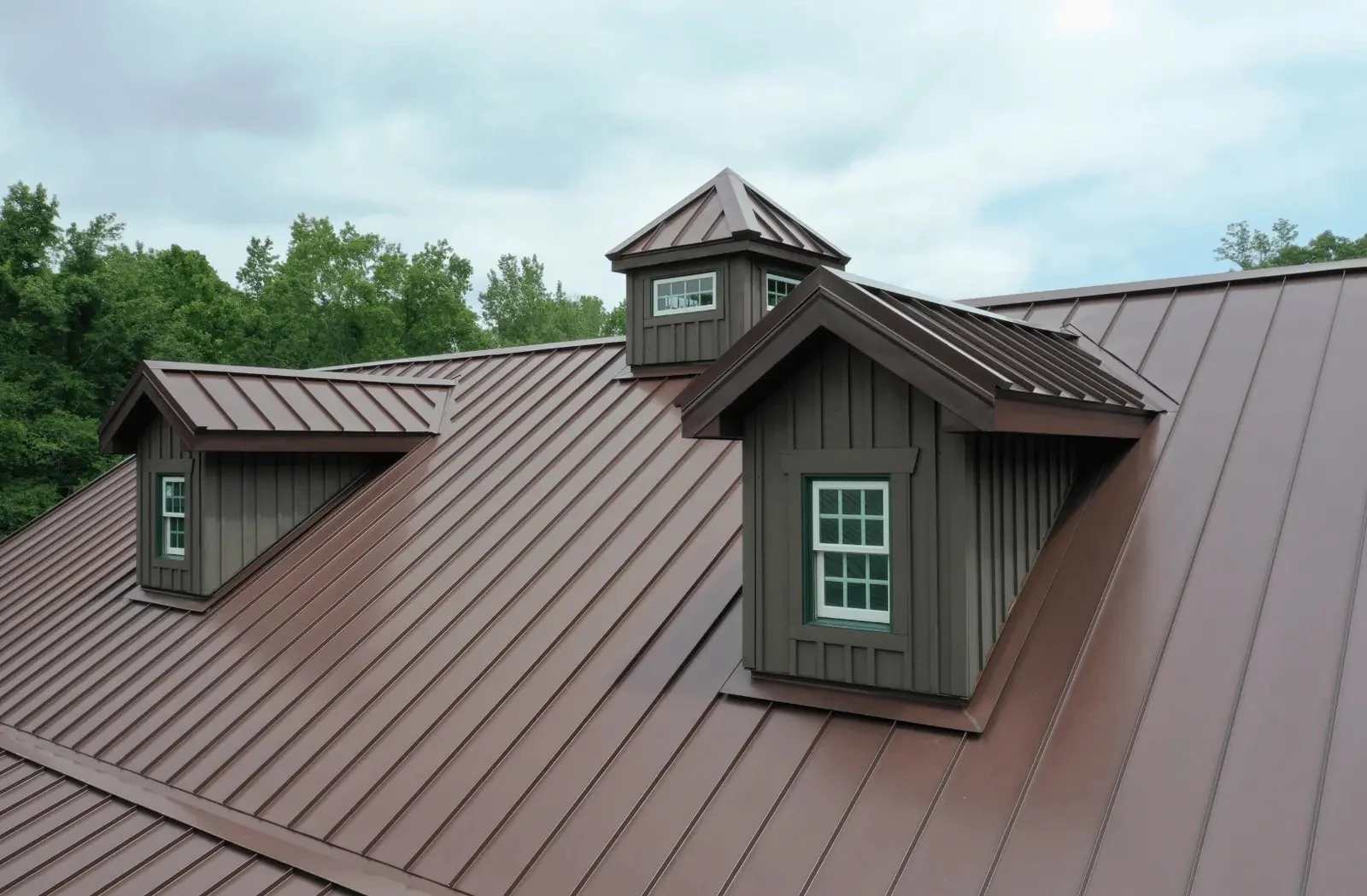
R-panel is the workhorse metal roofing system we install on warehouses, agricultural buildings, and light-industrial space throughout Central Oregon, particularly out toward Prineville, Redmond, and Madras where large-footprint buildings need economical coverage without the cost of a standing seam system. The panels attach with exposed fasteners through the ribs rather than concealed clips, which keeps material and labor costs down but shifts the maintenance burden onto the fasteners themselves. For an owner covering a hundred-thousand-square-foot warehouse, that cost difference against a standing seam system is significant enough to shape the whole roofing decision.
Why Exposed Fasteners Need Real Attention Here
Every screw penetration on an R-panel roof relies on a rubber washer to keep water out, and those washers are exactly what Bend's UV exposure and freeze-thaw cycling wear down fastest. We see far more leaks on R-panel roofs coming from failed or backed-out fasteners than from the panel material itself. Rubber gaskets that hardened and cracked under years of intense high-desert sun, or fasteners that backed out slightly during repeated thermal expansion and contraction, are the most common repair call we get on this system.
A proper R-panel maintenance program checks every fastener line rather than a sample, because a handful of failed gaskets scattered across a large industrial roof can each be a separate active leak point.
Where It's Doing the Most Work
Prineville's industrial growth, tied partly to the data center and timber activity out there, has put a lot of new R-panel roofing on distribution and manufacturing buildings. Madras sees the same pattern on agricultural processing and storage buildings along Highway 97, where large clear-span roofs need to be economical over a huge footprint. Around Redmond's industrial parks near the airport, R-panel covers everything from light manufacturing to equipment storage buildings, usually on structures where the budget doesn't support a standing seam or single-ply system over that much square footage.
We also see a fair amount of R-panel on outbuildings tied to the ranches and agricultural operations scattered through the county, equipment barns and storage structures where a straightforward exposed-fastener roof gets the job done without the expense of a more refined system.
Snow Load on Large Clear-Span Roofs
Agricultural and industrial buildings with R-panel roofing often have wide clear-span structures, and we pay close attention to how those roofs handle Central Oregon snow accumulation, since a large flat span without interior support columns concentrates load differently than a smaller building. Panel gauge and purlin spacing both factor into how much load the roof can safely carry, and we won't sign off on repair work that ignores a structural concern just because the leak itself looks minor.
Interior condensation is a related issue on unconditioned agricultural and warehouse buildings, where a big temperature difference between inside and outside air can form condensation on the underside of the panels during cold snaps. Without a proper vapor barrier or ventilated assembly, that condensation drips onto stored inventory or equipment and gets mistaken for a roof leak when the actual cause has nothing to do with the exterior fasteners at all.
Thermal Expansion Across Long Panel Runs
R-panel roofs on large industrial buildings often run panels the full length of the roof slope, sometimes well over a hundred feet, and that length amplifies thermal expansion and contraction through our daily temperature swings. Fastener holes can elongate over years of that movement, which is part of why periodic re-torquing and gasket replacement matters more here than it might in a climate with less daily temperature variation. We track fastener condition by section on larger roofs so a maintenance crew isn't guessing which run needs attention first the next time they're back on site.
What We Check on an R-Panel Inspection
- Fastener condition and gasket integrity across every panel run
- Panel lap and seam condition, checking for separation from thermal cycling
- Ridge cap and flashing details at penetrations and wall transitions
- Panel corrosion or coating wear, especially near ag or industrial exhaust
- Purlin and structural condition where visible from the interior
- Signs of fastener hole elongation from repeated thermal movement
Questions About R-Panel Roofing Around Bend
How often do R-panel fasteners need replacement?
It varies with sun exposure and roof age, but we generally recommend a full fastener and gasket inspection every few years, with replacement of any washers showing cracking or hardening rather than waiting for an active leak.
Is R-panel a good fit for a large agricultural storage building?
Yes, it's usually the most cost-effective option for covering a large clear-span footprint, as long as panel gauge and purlin spacing were sized correctly for the structure's actual snow load.
Why does my R-panel roof leak at random spots instead of one obvious location?
That pattern usually points to scattered fastener failures rather than a single membrane defect, which is common on R-panel roofs once gaskets start aging unevenly across the field.
Can R-panel be recoated instead of replaced?
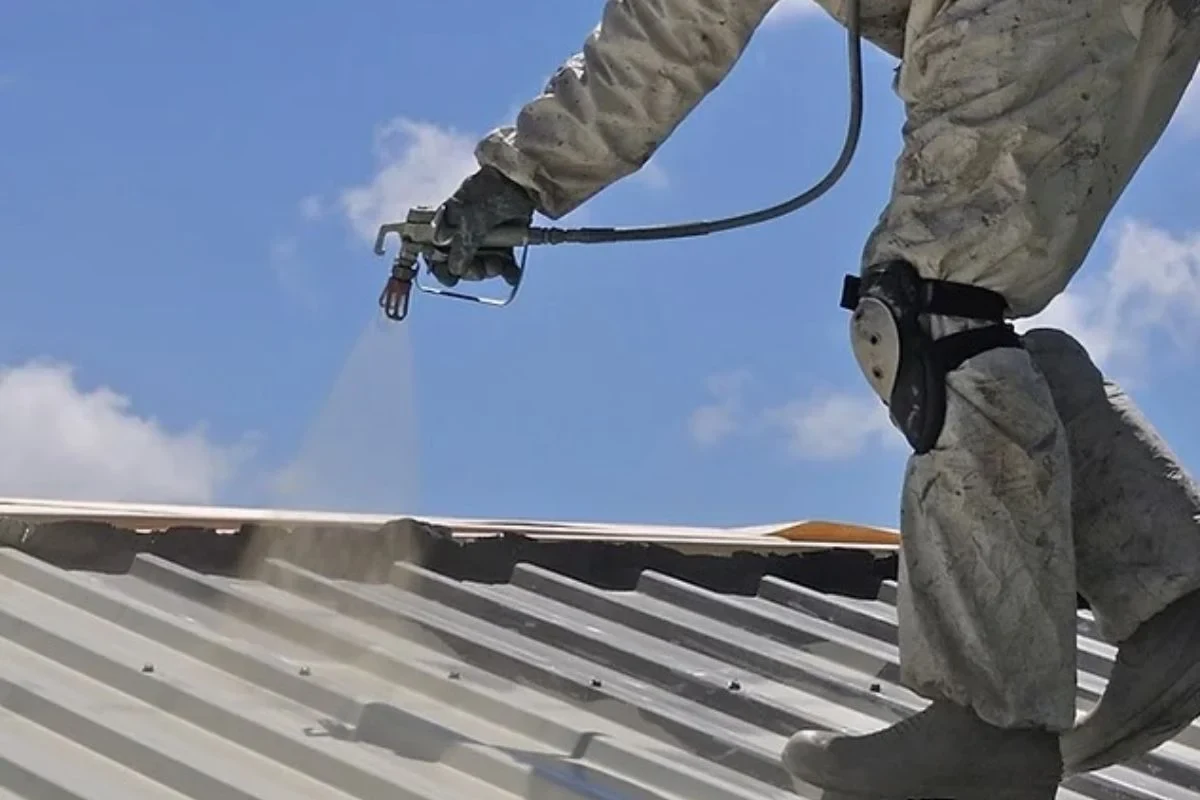
Often yes, if the structural panels are still sound. A coating can address surface corrosion and add reflectivity, though fastener and gasket issues still need to be addressed separately since a coating alone won't seal a failed washer.
Does thermal expansion really cause problems on metal roofs this size?
On long panel runs, yes. We've found elongated fastener holes on roofs where the original installation didn't account for how much a hundred-foot panel run moves through repeated daily temperature swings.
Related
Ready to review the roof scope?
Request a Roof Assessment