Standalone Restaurant Roofing in Bend, OR
Roofing for standalone restaurants along Third Street and Highway 20 in Bend, priced around grease exhaust, snow load, and freeze-thaw at rooftop drains.
Roofs Over the Standalone Restaurants Filling In Third Street
New restaurant construction has kept pace with Bend's growth along Third Street, Highway 20, and the retail pads spreading out near Cascade Village. Every one of those buildings puts a kitchen exhaust system, grease-laden vent, and rooftop makeup-air unit through the same low-slope membrane a standard retail box would never need.
A Build Pattern That Repeats Across the Corridor
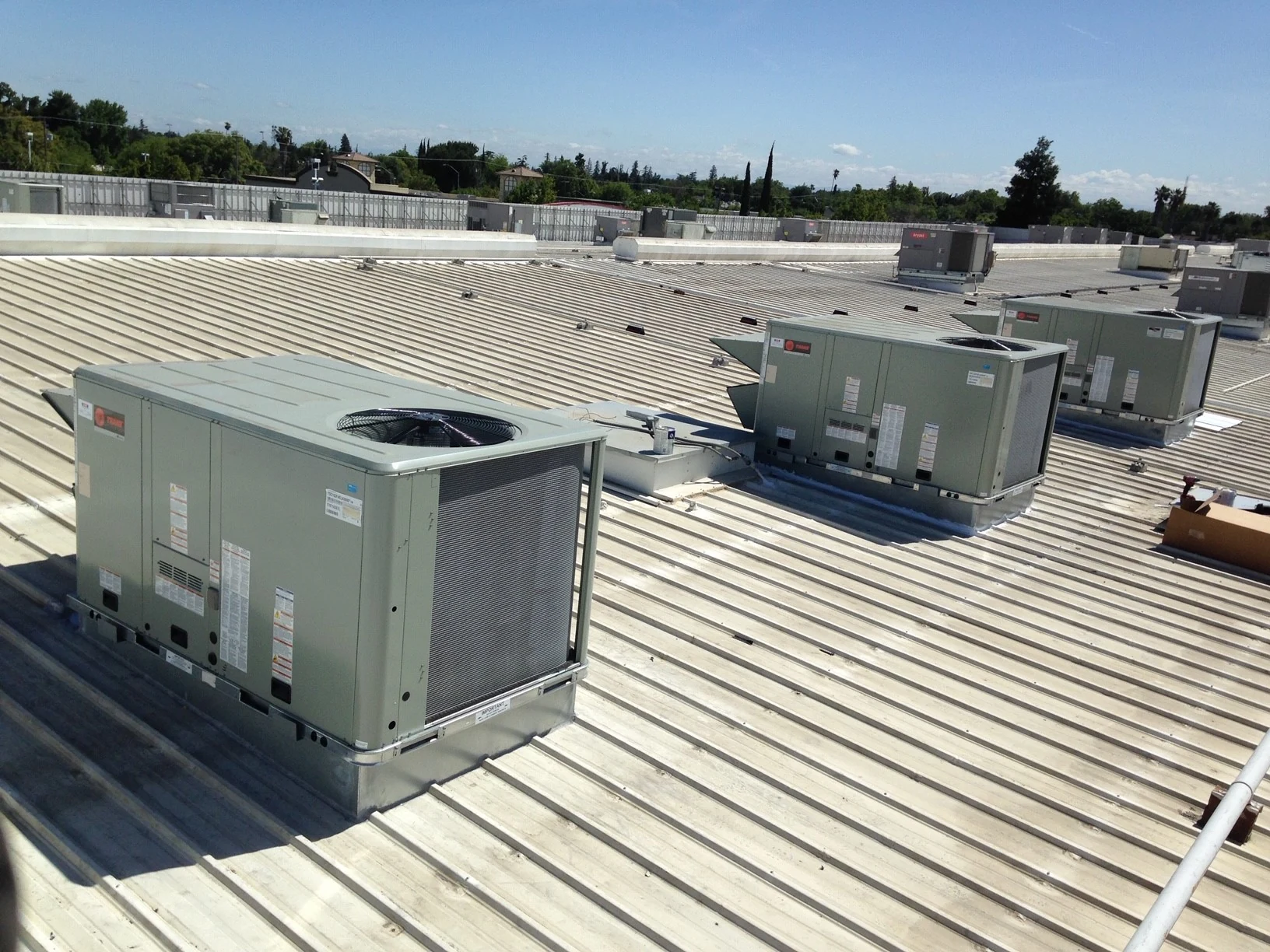
Most standalone restaurants in this market share a footprint: a compact low-slope roof, a kitchen hood exhaust stack near the back, and one or two rooftop package units handling both heating and makeup air for the kitchen. Whether the building sits on a Third Street pad or a newer lot off Highway 20 near Cooley Road, the failure points are the same, and they're rarely the open field of membrane.
We treat every restaurant roof as a penetration problem first and a membrane problem second, because grease exhaust curbs, gas line penetrations, and makeup-air ductwork are where these roofs actually leak.
Grease Exhaust Is the Detail That Wears Fastest
A rooftop grease exhaust fan runs hot, vibrates on its curb, and drips condensate and grease residue right onto the membrane below it if the curb flashing isn't holding. We check that detail on every restaurant inspection regardless of what brought us out, because grease breaks down membrane faster than almost anything else we see in this market.
Drive-through restaurant buildings add a canopy roof structure that standard sit-down locations don't have, and that canopy sheds snow directly onto the drive lane below it. We check canopy drainage and ice buildup separately from the main building roof, since a canopy icing over creates a slip hazard for customers and staff in a high-traffic area.
Fire code and insurance carriers both care about clearances and grease containment at that curb, so we document it clearly when we find a gap, since it's often cheaper to fix during a routine repair than after a fire marshal flags it.
Snow Load on a Small Roof Still Matters
A standalone restaurant roof is smaller than a warehouse or big-box field, but that doesn't make snow load a non-issue. Rooftop units, exhaust hoods, and parapet walls on a compact roof create the same drift and load-concentration problems seen on larger buildings, just packed into a tighter footprint. We check structural rating against actual equipment placement, not only the roof's overall square footage.
Freeze-Thaw at Drains Backs Up Kitchens Fast
A clogged or partially frozen roof drain on a restaurant doesn't just cause a roof leak. Ponding water that backs up near a rooftop unit or exhaust curb can force water into the building right above food prep or dining space, and that's a different kind of emergency call than a warehouse leak in an empty aisle. We prioritize drain and scupper checks on restaurant roofs specifically because the downside of ignoring one is faster and more visible here.
Outdoor patio dining, increasingly common at restaurants along the Third Street corridor, sometimes sits under a separate covered structure attached to the main building. We evaluate that attached patio roof on its own terms, since it's often built to a lighter standard than the main building and can show weather wear faster during a heavy winter.
What We Walk Before Quoting a Restaurant Roof
Restaurant roofs are small enough to inspect thoroughly in one visit, and we don't skip any part of the list:
- Grease exhaust curb flashing, clearance, and condensate drainage
- Makeup-air unit curb condition and gas line penetration seals
- Drain and scupper capacity against realistic melt and rain volume
- Parapet and equipment-cluster snow drift concentration
- Membrane condition directly beneath exhaust stack discharge
- Interior ceiling staining that points to a leak before it's obvious on the roof
Owners who've had recurring leak calls almost always find the answer in one of those first two items, not a mystery hole in the field membrane.
Summer tourist traffic through the Old Mill District and along the river pushes seasonal restaurant volume well above what a typical winter week sees, and that swing means kitchen exhaust equipment runs harder for a stretch of the year than the roof's baseline condition might suggest. We schedule proactive inspections ahead of the summer season specifically so a curb or drain problem doesn't turn into an emergency call during the busiest stretch of the year.
Questions We Hear From Restaurant Owners
Can you work on our roof without closing the kitchen?
Most repair and even reroof work can be phased around service hours, especially early morning before prep starts, so the kitchen stays operational.
Why does our roof leak right by the exhaust hood every time it rains?
That's almost always a curb flashing or condensate drainage issue at the exhaust penetration rather than a failure in the open membrane field.
Does grease residue actually damage the roof membrane?
Yes, over time grease breaks down some membrane types faster than UV or weather alone, which is why we check that zone closely on every visit.
How fast can you respond to an active kitchen leak?
Active leaks over food prep or dining space get priority scheduling. We stabilize the source first, then plan the full repair once it's safe to walk.
Is a smaller restaurant roof cheaper to maintain than a big-box roof?
Per square foot it can cost more to maintain, because the penetration density from kitchen equipment is much higher than on an open retail field.
Related
Ready to review the roof scope?
Request a Roof Assessment