Commercial Roofing Contractors Old Mill District, OR
Commercial roofing contractors serving Old Mill District, OR with commercial roof repair, replacement, coatings, maintenance programs, inspections, and documented roof reports.
Commercial Roofers in Old Mill District, OR
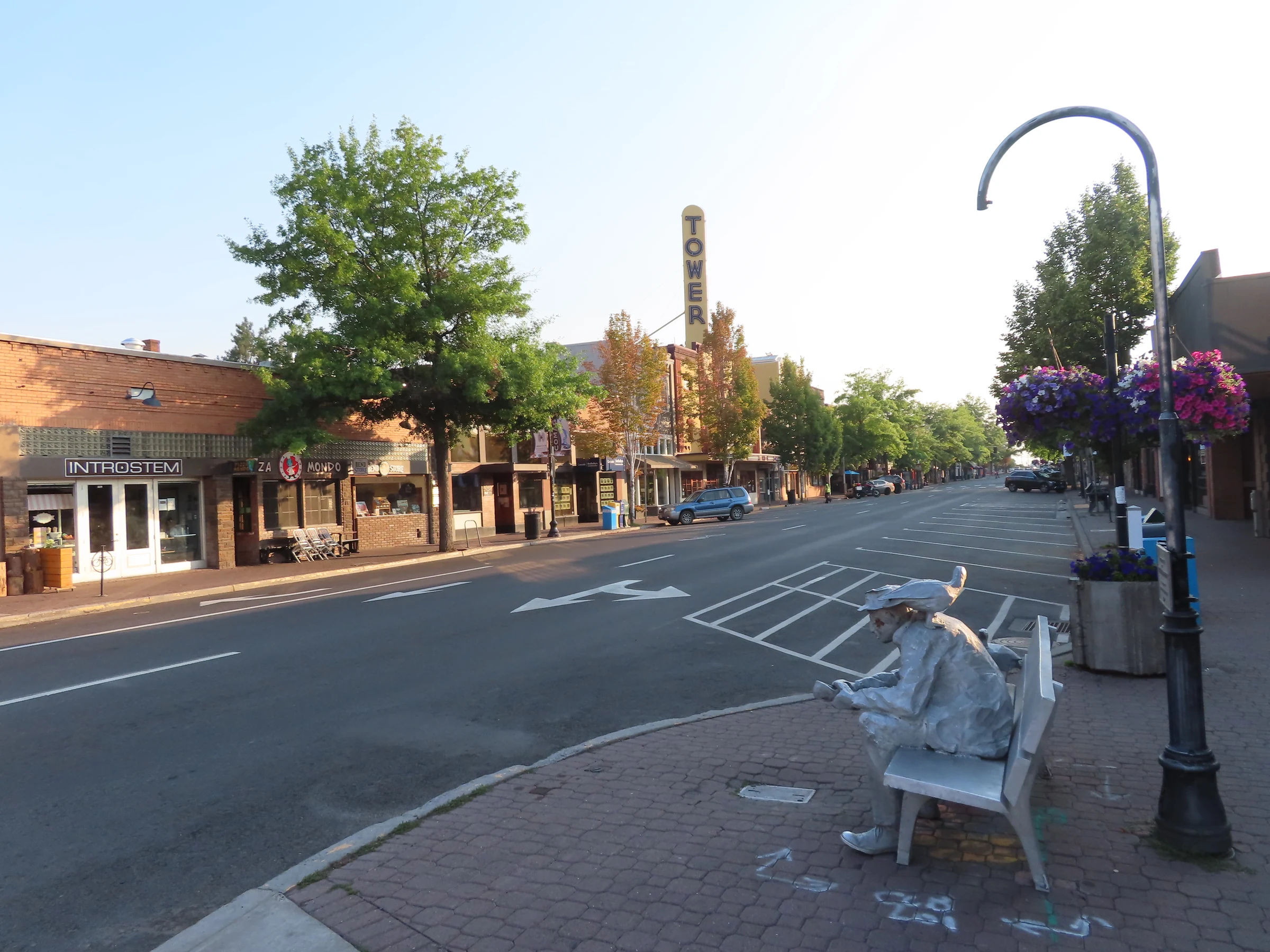
For commercial properties in Old Mill District, OR, the defensible choice between repair, restoration, and replacement starts with roof-system condition, moisture findings, drainage performance, and remaining service life. The Old Mill District sits on the old Brooks-Scanlon mill grounds along the Deschutes River, and today it's retail, office, and event space packed into a compact footprint that draws heavy foot traffic most of the year. Roof work here has to work around occupied storefronts, office tenants, and a concert calendar, sometimes all in the same week.
Retail Roofs With Constant Foot Traffic Below
The retail buildings along the district's main pedestrian corridor stay open long hours nearly every day of the year, which means roof access, staging, and material delivery all have to route around customers rather than through them. We plan loading zones and lift placement around the district's pedestrian pattern rather than simply the shortest path from the truck to the roof.
These buildings also share walls and roof lines in places, so a leak or repair on one tenant's section can affect the storefront next door, and we coordinate with property management before starting any work that might cross a lease boundary.
Signage and awning structures mounted along these storefronts also complicate roof edge access more than a plain facade would, since a lift or ladder placement that would be routine on an open building has to route around fixed architectural features here. We scout that access carefully before a crew arrives on site rather than discovering the conflict the morning of the job.
Office Space Above the Shops
Several buildings in the district carry office space above ground-floor retail, and that stacking changes how disruptive roof work can be. Noise and vibration from a reroof reach both the retail floor and the office tenants above it, so we schedule the loudest phases of a job, tear-off and fastening, around business hours when we can.
The Amphitheater Complex and Event Scheduling
The amphitheater and the buildings that support it run on a concert and event calendar that's essentially fixed months in advance, and any roof work near that complex has to work around show dates rather than the other way around. A crew, material staging, or a lift parked in the wrong spot on a show night creates a problem well beyond the roof itself.
We get the venue's event schedule early in any project planning conversation and build our timeline around it, prioritizing the off-season and weekday gaps between shows for the work that would otherwise conflict with event operations.
What a District Roof Survey Has to Account For
Because of how compact and occupied this district stays, a roof survey here typically covers:
- Shared roof lines and party walls between adjacent retail tenants
- Pedestrian and delivery routing for material staging and lift placement
- Event calendar conflicts near the amphitheater complex
- Rooftop equipment serving restaurant and food-service tenants
- River-adjacent humidity and its effect on membrane and flashing condition
River Proximity and Central Oregon Weather
Being right along the Deschutes River gives this district slightly different humidity patterns than drier parts of the Bend metro, and that moisture works on flashing and coping over time in ways a drier inland building doesn't experience as much. Winter still brings the same snow load and freeze-thaw cycling as the rest of Bend, and summer sun reflecting off the river can add glare and heat load to south-facing roof sections that face the water.
Restaurant and food-service tenants throughout the district also mean grease exhaust and rooftop kitchen equipment are common, and we check curb seals and flashing around that equipment specifically, since grease exposure degrades some roofing materials faster than standard weathering does.
We also keep an eye on how the district's landscaping affects roof drains, since mature trees and planted areas along the riverfront walkway shed leaves and seed pods that travel further onto adjacent rooftops than most owners expect. A drain that was clear in spring can carry a noticeably heavier debris load by the time fall arrives, and that seasonal shift is part of why we recommend a fall check on top of any standard maintenance visit for buildings closest to the landscaped corridor.
We also stay in close contact with the district's broader property management team, since decisions about one building's roof sometimes intersect with shared infrastructure, common drain lines, connected parapet caps, that runs across more than one tenant space. Coordinating that conversation early avoids a situation where a repair on one roof section inadvertently affects drainage or flashing on the section next to it.
Old Mill District Roofing Questions
How do you schedule roof work around the amphitheater's concert calendar?
We get the venue's event schedule early and plan the most disruptive work phases around off-season and weekday gaps between shows.
Can roof work happen without closing a retail storefront?
In most cases yes, since we route material staging and lift placement around the district's pedestrian and delivery patterns rather than through occupied storefronts.
Does river humidity affect roof maintenance in this district?
Yes, buildings closer to the Deschutes River see slightly different moisture exposure than drier parts of the metro, which we factor into flashing and coping inspections.
How do you handle grease exhaust from restaurant rooftop equipment?
We check curb seals and surrounding flashing specifically around that equipment, since grease exposure can degrade some roofing materials faster than normal weathering.
What happens if a leak affects a shared roof line between two tenants?
We coordinate with property management before starting work that could cross a lease boundary, since shared roof lines and party walls are common throughout the district.
Related
Ready to review the roof scope?
Request a Roof Assessment